
The Runoff Destination Hierarchy Explained (And How to Justify Your Choice)
The National SuDS Standards promote a clear order of preference for where surface water should go. This is often called the runoff destination hierarchy. It matters because it forces the design team to consider better outcomes first, rather than defaulting to the easiest connection.
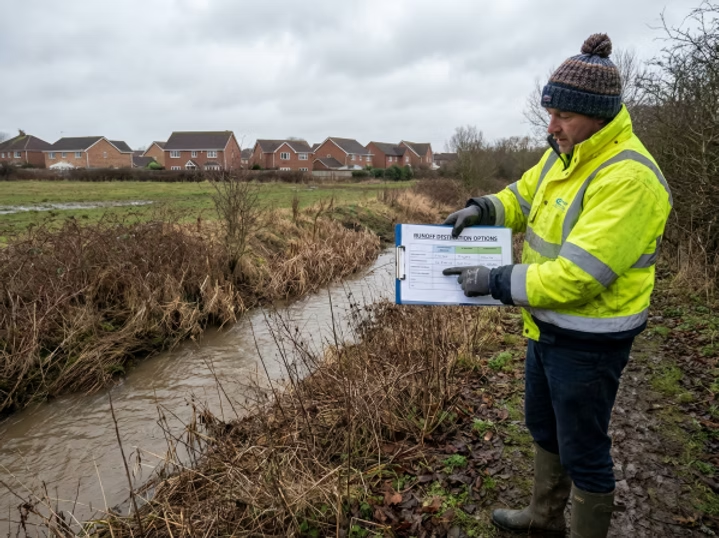
Option one is to use the water on site, for example for non potable uses. This is not always practical on smaller schemes, but it is worth considering on larger developments, mixed use sites, or where irrigation and landscape needs exist.
Option two is infiltration. This is often the preferred route because it keeps water out of sewers and watercourses. But it must be supported by ground investigation and infiltration testing. If infiltration is not viable, you need to show why.
Option three is discharge to a surface water body.
Option four is discharge to a surface water sewer.
Option five is discharge to a combined sewer, which is typically the least preferred.
The key point is not that every site must infiltrate. The key point is that your submission should show that you have considered the hierarchy and chosen the best feasible option.
A simple way to justify your choice is to include a short options table in the drainage strategy. List each option, state whether it is feasible, and give one or two evidence based reasons.