
National SuDS Standards in Plain English (What They Mean for Your Next Planning Submission)
f you are an architect or housing developer, you do not need another policy document to read. You need to know what the National SuDS Standards mean in practice, what planners will ask for, and how to avoid the slow, expensive back and forth that can derail a programme.
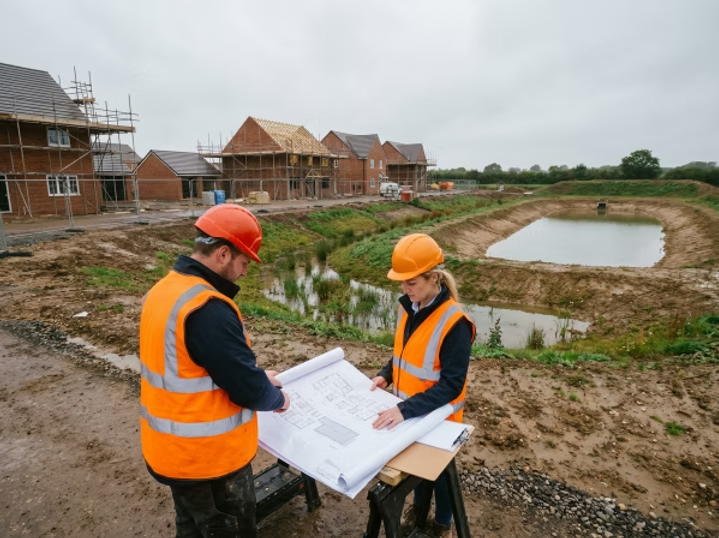
In simple terms, the National SuDS Standards set out what good surface water drainage looks like for new development. They push projects towards managing rainwater in a way that reduces flood risk, protects water quality, and makes long term maintenance realistic. The standards are not just about calculations. They are about evidence, clarity, and showing that your chosen approach is the best available option for that site.
For most schemes, the biggest change is the expectation that you can explain your decisions. Why did you choose infiltration, or why not. Why that discharge rate. Where will exceedance flows go. Who will maintain it. When those answers are missing, planning queries appear, and the design team loses weeks.
A practical way to think about compliance is this. A good submission tells a clear story that a non specialist can follow, backed up by drawings and sensible calculations. If your drainage strategy reads like a set of disconnected outputs, it is far more likely to be questioned.
Here is one of my rules of thumb. If a planner cannot understand the logic in two minutes, they will quite reasonably come back with questions.
What to do next. Start drainage thinking earlier than you think you need to. Ask for the right surveys and ground information up front. Then make sure your drainage narrative, drawings, and calculations all match.