
Water-stressed areas: why rainwater harvesting deserves a default “yes” in early design
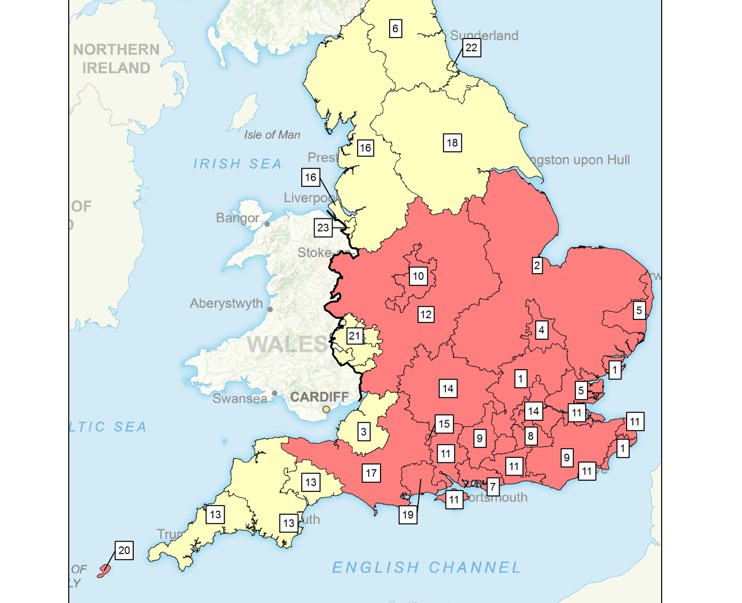
The National SuDS Standards state that rainwater harvesting shall be considered where the development is in an area identified as seriously water stressed. as shown in the areas coloured red above. That’s a clear signal to developers: in these locations, the case for rainwater reuse is stronger, and you should expect the topic to come up in design and approvals.
Even outside water-stressed areas, the standards still push the “resource first” mindset. But in water-stressed areas, rainwater harvesting becomes a practical resilience measure: it can reduce demand on potable supply for non-potable uses, and it can help demonstrate that the scheme is responding to local constraints.
From a delivery perspective, the earlier you consider rainwater harvesting, the easier it is to integrate. Storage location, access for maintenance, routing of roof drainage, and space for treatment components all become simpler when they’re part of the initial layout rather than a late add-on.
If you’re building a repeatable approach, it’s worth creating a simple internal rule: for water-stressed areas, start feasibility with rainwater harvesting as a default option, then document why you keep it or why you don’t.