Maintenance and long-term performance: what developers should plan for from day one
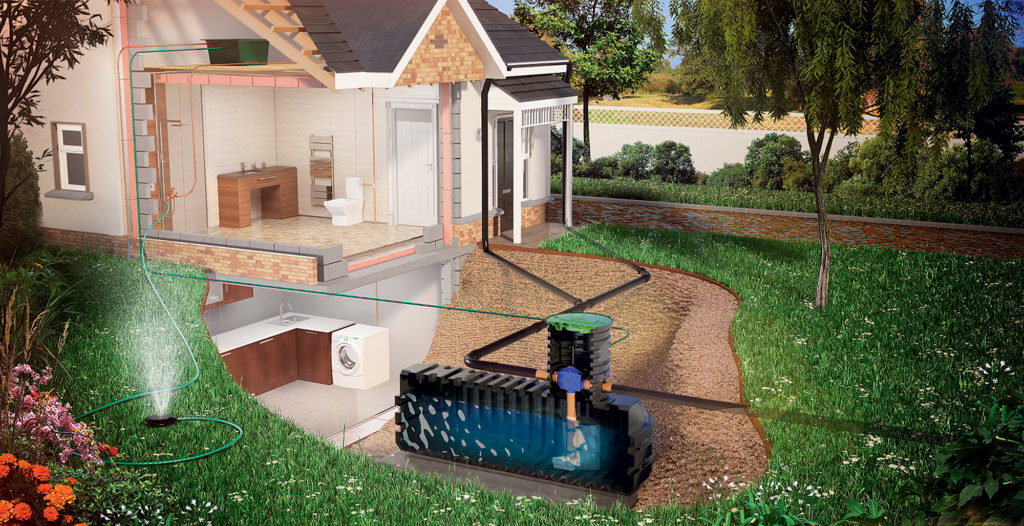
Rainwater harvesting can be a strong part of a SuDS strategy, but only if it keeps working after handover. For developers, the real risk is not usually the tank itself. It is unclear ownership, poor access, missing maintenance allowances, and systems that are specified without thinking through how they will be operated on a live site.
This article is a practical guide to planning maintenance and long-term performance from day one, so your rainwater harvesting system supports compliance, avoids future complaints, and stays reliable for the people who inherit it.
Start with the end in mind: who will own and operate it?
Before you finalise the design, decide who is responsible once the project is complete. That decision shapes everything else, including layout, access, documentation, and the ongoing cost model.
Common ownership models include:
- A building owner or facilities management (FM) company (typical for commercial and mixed-use)
- A management company (typical for apartment blocks and some housing estates)
- Individual homeowners (more common for single dwellings, but it changes the design approach)
If the long-term operator is a non-technical party, the system needs to be simpler, more robust, and easier to inspect. If it is an FM team, you can often justify more complexity, but only if the maintenance plan is clear and resourced.
Design for maintainability (not just installability)
A system can be installable and still be a maintenance headache. Long-term performance comes from designing around access, safe working, and predictable servicing.
Access and safe working
Plan for:
- Safe access to filters, control units, and inspection points
- Clear working space around plant, so maintenance does not require dismantling other services
- Practical lifting and removal routes for components that will be cleaned or replaced
- Drain-down and isolation points, so parts can be serviced without shutting everything down
If access is awkward, maintenance gets skipped. If maintenance gets skipped, performance drops, and the system becomes a liability rather than an asset.
Put the dirty bits where they can be reached
Most operational issues are linked to debris management. Leaves, silt, roof grit, and organic matter are normal, especially in autumn and after storms.
From day one, make sure:
- Pre-filtration is provided and accessible
- Filter housings can be opened without specialist tools
- There is a clear method for cleaning and disposing of collected debris
- Overflow routes are protected from blockage and easy to inspect
A simple rule is this. If you cannot easily inspect and clean the parts that catch debris, you are designing in future failure.
Think in failure modes: what happens when things go wrong?
Developers often focus on normal operation. Long-term performance depends on what happens in abnormal conditions.
Ask these questions during design reviews:
- What happens if the filter blocks?
- What happens if the tank is full?
- What happens if power is lost?
- What happens if the pump fails?
- What happens if the incoming water quality is worse than expected?
A well-designed system fails safely. That usually means:
- Clear overflow pathways that do not cause flooding
- Back-up mains top-up (where appropriate) that prevents service disruption
- Alarms or indicators that make faults visible to the operator
- Isolation points that allow repair without major disruption
Water quality and end uses: match the system to the demand
Long-term performance is not only about hydraulics. It is also about whether the harvested water is suitable for the intended uses.
Typical non-potable uses include:
- WC flushing
- Irrigation
- Vehicle washing (where relevant)
The maintenance approach changes depending on use. For example, irrigation systems can clog if filtration is poor, and WC systems can suffer from odour or staining if water quality is not managed.
The key developer question is this. Are you specifying a system that will be operated properly for the chosen end uses?
Maintenance planning: what should be in the O&M from day one?
A rainwater harvesting system should not be handed over with vague instructions. The operator needs a clear, practical plan.
At minimum, the Operations and Maintenance (O&M) information should cover:
- A simple system description, including what it does and what it feeds
- As-built drawings and locations of all access points
- Isolation points and a safe shut-down procedure
- Filter inspection and cleaning frequency, with seasonal notes
- Pump and control unit checks
- Tank inspection approach, including safety considerations
- What normal looks like, so faults are obvious
- What to do when alarms trigger or performance drops
- A recommended maintenance schedule and a log template
If you are using a management company or FM provider, include a clear statement of what is expected and what is not included.
Build maintenance into the site layout and programme
Maintenance is not just a handover issue. It is a design and construction issue.
Make sure access points are not value-engineered away
During delivery, it is common for access details to be simplified. The risk is that inspection covers, rodding points, or safe access routes are reduced to save time or cost.
If those details are removed, you may still have a rainwater harvesting system on paper, but you have lost the ability to maintain it properly.
Protect the system during construction
Construction-phase contamination is a major cause of early performance problems. Silt and debris introduced during build can clog filters and reduce storage effectiveness.
Plan for:
- Temporary protection of inlets and inspection points
- Clear rules about what can and cannot enter the system during construction
- A commissioning clean and inspection before handover
Commissioning and handover: prove it works before you walk away
Long-term performance starts with proper commissioning.
A good commissioning and handover process should include:
- Visual inspection of all access points and components
- Confirmation that overflow routes function as intended
- Demonstration of pump operation and controls
- Confirmation that mains top-up (if used) operates correctly
- A handover pack that includes O&M, as-builts, and maintenance schedule
- A short operator briefing, even if it is only 30 minutes
If the operator does not understand the system, it will not be maintained correctly.
Budgeting: the maintenance cost is part of the business case
Developers sometimes avoid maintenance discussions because they fear it weakens the case. In reality, clear maintenance planning strengthens it.
A practical approach is to:
- Identify the routine tasks, such as inspection, cleaning, and checks
- Assign responsibility, meaning who does it
- Estimate frequency, such as monthly, quarterly, or seasonal
- Build it into service charges or FM budgets where relevant
When maintenance is planned and funded, performance is far more reliable, and the system is less likely to be removed, bypassed, or neglected.
The developer’s day one checklist
Use this as a quick internal check before the design is locked:
- Who owns and operates the system after handover?
- Are filters, controls, and inspection points safely accessible?
- Have we designed for debris management and seasonal conditions?
- Do failure modes overflow safely without causing flooding?
- Is the system matched to the actual non-potable demand?
- Is there a clear O&M plan with a realistic schedule and log?
- Have we protected the system during construction and planned commissioning?
- Is maintenance budgeted and assigned, not assumed?
Closing thought
Rainwater harvesting is often discussed as a design feature. Developers who get the best long-term outcomes treat it as an operational asset, one that needs clear ownership, simple access, and a maintenance plan that is realistic for the people who will live with it.
If you want, I can turn this into a one-page handover checklist you can attach to your SuDS documentation, so maintenance is addressed clearly from the start.