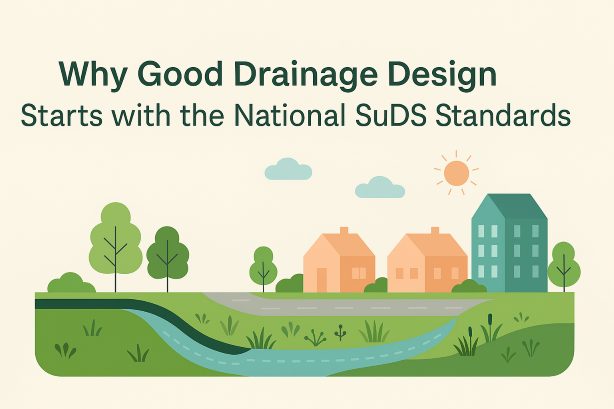
Why Good Drainage Design Starts with the National SuDS Standards
When it comes to planning any development, drainage design should never be treated as an afterthought. A well‑considered surface water strategy does far more than tick a regulatory box – it reduces flood risk, supports planning approval, protects water quality, and contributes to creating healthier, more resilient places for people to live and work.
That’s exactly why the National SuDS Standards are such a valuable place to begin.
Why Start with the Standards?
Too often, drainage is approached late in the design process—after layouts are fixed, levels are already decided, and opportunities for smarter solutions have passed. The National SuDS Standards encourage a different approach. Rather than jumping straight into pipe sizes, attenuation volumes, or discharge rates, they ask you to step back and consider the bigger picture:
- What is the purpose of this drainage design?
- How does it support the wider site?
- How will it perform long‑term?
By guiding early decision‑making, the standards help ensure the final design is more effective, more compliant, and easier to justify to planning authorities.
The 11 SuDS Principles You Should Know
The National SuDS Standards are built around 11 core principles that shape how surface water should be managed. In practical terms, they encourage designers to:
- Consider the whole site and its context before selecting drainage solutions.
- Manage runoff as close to where rain falls as possible, avoiding rapid conveyance elsewhere.
- Mimic natural drainage patterns wherever feasible.
- Follow the drainage hierarchy – infiltration first, then watercourses, then surface water sewers, with combined sewers as a last resort.
- Control both runoff rate and runoff volume to avoid increasing flood risk.
- Design for a range of rainfall events, including extreme storms.
- Account for climate change so systems remain functional over the long term.
- Protect water quality by incorporating appropriate treatment stages.
- Provide amenity and biodiversity benefits alongside hydraulic performance.
- Ensure long‑term maintainability, with safe and practical access.
- Integrate drainage with the wider site design, not as a bolt‑on engineering exercise.
These principles set the tone for a balanced, thoughtful approach to surface water management—one that benefits the development, the environment, and the community.
Why These Principles Matter
Starting with these principles helps avoid some of the most common pitfalls in drainage design:
- Missed opportunities for natural solutions
- Planning objections and delays
- Over‑engineered or unnecessarily expensive designs
- Systems that work on paper but fail in practice
- Maintenance issues that surface years later
Local authorities and Lead Local Flood Authorities increasingly expect clear evidence that SuDS principles have been properly considered. Building your strategy around these foundations makes it easier to demonstrate that your approach is reasonable, policy‑aligned, and appropriate for the site.
A More Practical Mindset for Better Drainage Design
The real strength of the National SuDS Standards is the mindset they promote. They remind us that drainage design is not simply about getting water off site—it’s about:
- Managing water responsibly
- Reducing downstream impacts
- Supporting sustainable development
- Ensuring long‑term performance
- Adding value to the site
When drainage is integrated into early site planning, you not only get a more robust technical solution—you also get better coordination across the project, fewer design conflicts, and a smoother route to planning approval.
Need Support with Your Drainage Strategy?
Many developers, architects, and property professionals understand the importance of SuDS but still struggle with the practicalities—tight planning deadlines, challenging site constraints, conflicting guidance, or comments from local authorities that are difficult to interpret.
That’s where The Drainage Designers can help.
We can:
- Assess site constraints
- Review feasible drainage options
- Develop a clear, practical SuDS strategy
- Produce full supporting drawings and documentation
- Ensure compliance with SuDS principles and planning policy
- Help you avoid delays caused by incomplete or unclear submissions
Instead of wrestling with technical guidance or second‑guessing design decisions, you can rely on us to handle the detail and guide the process from the drainage side.
Let’s Talk About Your Project
If you’d like us to take a look at your development or help you build a SuDS‑compliant drainage strategy, just get in touch:
📞 Call: 01256 807116
🌐 www.thedrainagedesigners.co.uk
Helping you design drainage strategies that work—today and for the future.