Designing SuDS for Residential Developments
Integrating SuDS from the Start
Designing Sustainable Drainage Systems, or SuDS, for residential developments is no longer a secondary technical exercise but a central part of successful scheme delivery. One of the most common challenges for architects and housing developers is that SuDS are often considered too late in the design process, once layouts are already fixed and flexibility is limited. This typically results in an over reliance on underground tanks, deep pipework, and expensive attenuation systems that add cost without delivering wider value. A more effective approach is to treat water management as a design driver from the outset, identifying natural flow paths, site levels, and opportunities for surface features such as swales and basins during masterplanning rather than attempting to retrofit them later.
Understanding Ground Conditions Early
Another major pain point comes from misunderstandings around ground conditions. SuDS strategies are frequently based on assumptions about infiltration potential that are only validated at a later stage, resulting in failed soakaway designs or unsuitable permeable paving solutions. This can lead to redesign, planning amendments, and delays on site. Early ground investigation and infiltration testing are essential to establish whether an infiltration based, attenuation based, or hybrid solution is appropriate. Without this, developers risk committing to strategies that are not feasible in practice.
Coordinating Levels and Layouts
Closely linked to ground conditions is the issue of level coordination. SuDS rely heavily on gravity, and without careful alignment between architecture, highways, and drainage design, conflicts can arise between finished floor levels, road gradients, and drainage inverts. These issues often emerge late in the design process, forcing last minute adjustments that affect accessibility, plot layouts, and overall viability. Establishing a coordinated levels strategy early helps ensure that water can be conveyed efficiently without compromising other aspects of the development.
Designing for Maintenance
Maintenance is another area that is frequently overlooked. SuDS are not passive systems and require ongoing upkeep to perform effectively over time. Designs that fail to consider access, safety, or long term ownership can result in neglected infrastructure and increased flood risk. Developers should ensure that maintenance responsibilities are clearly defined from the outset and that SuDS components are accessible and straightforward to manage. In many cases, simple, visible systems are more robust and easier to maintain than complex underground solutions.
Avoiding Over Reliance on Underground Systems
There is often a tendency to favour underground drainage solutions in an effort to maximise developable land. While these systems may appear space efficient, they provide little in terms of biodiversity or amenity value and can be more expensive to install and maintain. In addition, planning authorities increasingly favour surface based SuDS that contribute to landscape quality and placemaking. Developments that rely too heavily on buried infrastructure may therefore face resistance during the approval process.
Creating Multi Functional Spaces
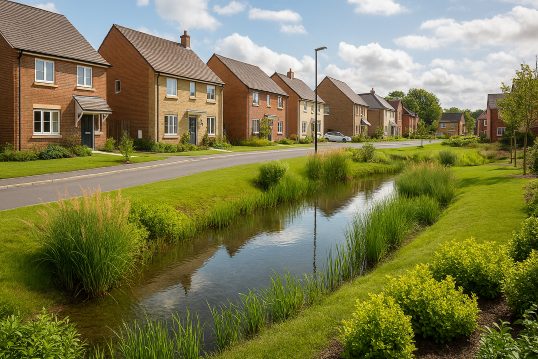
Successful SuDS design involves thinking beyond drainage alone. Features such as basins, swales, and rain gardens can be integrated into open spaces and streetscapes to deliver multiple benefits. These include improved visual appeal, increased biodiversity, and enhanced wellbeing for residents. When designed well, SuDS can become a positive feature of the development rather than a constraint, helping schemes stand out in a competitive market.
Navigating Approval Requirements
Understanding the requirements of different stakeholders is critical to avoiding delays. Lead Local Flood Authorities focus on flood risk and hydraulic performance, while planning authorities consider visual and environmental impact. Water companies may also have specific criteria related to connections and adoption. Early engagement with all relevant parties helps align expectations and reduces the risk of objections or redesign later in the process.
Planning for Exceedance
No drainage system can cope with every extreme weather event, which means exceedance must be carefully considered. Without a clear strategy, excess water can flow toward buildings and cause damage during heavy rainfall. Designing safe overland flow routes, such as directing water along roads or landscaped corridors, ensures that exceedance flows are managed without putting properties at risk.
Coordinating Utilities and Space
Another frequent challenge is the coordination between SuDS and utility infrastructure. Both require space, and conflicts can arise if they are planned in isolation. Utility corridors often encroach on drainage features, weakening the overall design and forcing compromises. A coordinated approach ensures that all elements work together and that SuDS components are protected from later changes.
Addressing Adoption and Long Term Responsibility
Uncertainty around adoption is a recurring issue for residential developments. If it is unclear who will take ownership of SuDS features, schemes can face delays at both planning and completion stages. This is particularly relevant for surface features such as basins and swales. Agreeing adoption routes early, whether through local authorities, water companies, or management companies, is essential to avoid complications later.
The Cost of Getting It Wrong
The consequences of poor SuDS design can be significant. Developers may face planning delays, increased costs due to redesign, reduced site yield, and potential flood risk liabilities. There is also the reputational impact to consider, particularly as environmental performance becomes more important to buyers and stakeholders.
A More Integrated Approach
Conversely, well designed SuDS can streamline approvals, reduce infrastructure costs, and enhance the overall quality of a development. By addressing drainage early, coordinating across disciplines, and embracing surface based, multi functional solutions, architects and developers can avoid common pitfalls and deliver schemes that are both compliant and commercially successful.