The SuDS Design Philosophy – Managing Rain Where It Falls
Understanding the Core Principle of SuDS
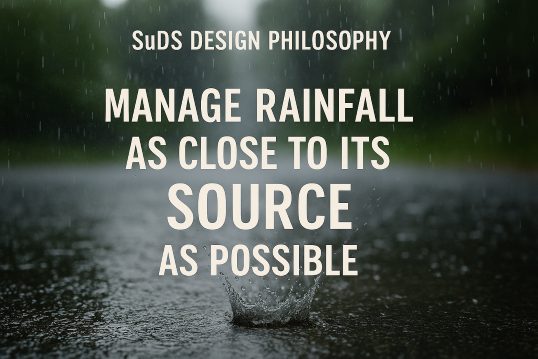
At the heart of the CIRIA SuDS Manual is a simple but transformative idea: rainfall should be managed as close to where it lands as possible. This principle represents a fundamental shift away from traditional drainage systems, where water is quickly collected and moved off site via pipes.
Modern guidance makes clear that sustainable drainage should be integrated into developments wherever possible, as outlined in UK planning practice guidance:
👉 https://www.gov.uk/guidance/flood-risk-and-coastal-change
Instead of removing water immediately, the SuDS approach encourages designers to slow, store, and treat it within the site boundary. This mimics how water behaves in natural landscapes and reduces pressure on existing drainage networks.
If you are new to SuDS, start with the fundamentals:
👉 https://www.thedrainagedesigners.co.uk/what-is-the-ciria-suds-manual/
Applying the Drainage Hierarchy
A key part of the SuDS philosophy is the drainage hierarchy, which guides designers towards the most sustainable solution. The hierarchy prioritises infiltration into the ground, followed by discharge to watercourses, then surface water sewers, with combined sewers as the last option.
This hierarchy is reinforced in national SuDS standards, which set out how surface water should be managed in new developments:
👉https://www.gov.uk/government/publications/national-standards-for-sustainable-drainage-systems/national-standards-for-sustainable-drainage-systems-suds
Applying this hierarchy effectively requires early design decisions around layout, levels, and how different areas of a site will drain.
Understanding the Management Train
Another central concept within the SuDS Manual is the management train. Rather than relying on a single drainage feature, SuDS uses a sequence of components that manage water progressively across a site.
For example, water may begin at source through features such as roofs or paving, move through conveyance systems like swales, and then be stored in basins or ponds before discharge. Each stage reduces flow and improves water quality.
You can explore how these components work in practice here:
👉 https://www.thedrainagedesigners.co.uk/key-suds-components-explained/
Mimicking Natural Hydrology
The overall goal of this approach is to replicate natural hydrological processes as closely as possible. In undeveloped land, rainfall is absorbed into the ground, used by vegetation, or released slowly into watercourses. Development disrupts this balance by introducing impermeable surfaces.
SuDS aims to restore that balance by reintroducing infiltration, storage, and surface flow pathways. This approach is also aligned with wider environmental strategies that promote natural flood management:
👉 https://www.gov.uk/guidance/natural-flood-management-programme
Integrating Quantity and Quality
One of the key strengths of the SuDS design philosophy is that it considers both water quantity and water quality at the same time. Slowing water down not only reduces flood risk but also allows pollutants to settle or be filtered out.
This integrated approach is particularly important in urban areas, where runoff can carry oils, sediments, and other contaminants.
Designing for Real Sites
While the principles of SuDS are straightforward, applying them in practice requires careful consideration of site constraints. Urban developments often have limited space, challenging ground conditions, or existing infrastructure that must be accommodated.
In these situations, designers need to apply the principles flexibly while still following the overall philosophy of managing water at source.
Understanding how this affects layout and design:
👉 https://www.thedrainagedesigners.co.uk/integrating-suds-into-urban-design/
Why This Philosophy Matters
Managing rain where it falls is not just a technical principle – it is a design driver. When applied early, it influences how a site is arranged, how levels are set, and how space is used.
Designs that follow this philosophy are more likely to:
- Reduce flood risk
- Improve water quality
- Integrate more easily with planning requirements
- Avoid late-stage redesign
These benefits become even more important when considering flood risk and climate change:
👉 https://www.thedrainagedesigners.co.uk/designing-for-flood-risk-and-climate-change/
If you are working on a project and want to avoid delays, reduce redesign risk, and integrate SuDS effectively from the outset, we can help. At The Drainage Designers, we work closely with architects and developers to deliver compliant, practical, and well-integrated drainage strategies that support both design and planning approval. Whether you are at concept stage or progressing a live scheme, we would be happy to discuss how we can add value to your project.
Martin Young
📞 01256 807116
📧 martin.young@thedrainagedesigners.co.uk
🌐 https://www.thedrainagedesigners.co.uk/