Hiring Drainage Consultants for Property Developers
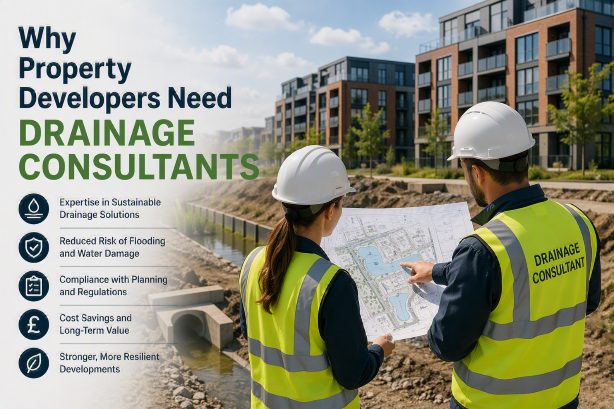
Why Property Developers Need Drainage Consultants
Hiring drainage consultants is essential infrastructure planning that determines whether your project receives planning permission and functions properly for decades. The real challenge isn’t understanding drainage in isolation, it’s integrating drainage strategy into your broader site development plan whilst meeting increasingly stringent regulatory standards around stormwater management and flood risk assessment. A single oversight can derail planning applications, delay construction, or create expensive remedial work after completion.
Property developers face three critical pressures: maximising buildable land, minimising costs, and securing approvals. Drainage consultants balance these competing demands by designing systems that satisfy regulatory bodies, protect neighbouring properties, and fit within your budget constraints.
Key TakeawayDrainage design is a technical discipline that requires specialist expertise. Without it, developers risk planning rejection, environmental violations, and post-completion liability.
Key Roles and Responsibilities of a Drainage Consultant
A drainage consultant functions as a technical bridge between your development vision and regulatory reality, working across multiple disciplines to deliver compliant, functional infrastructure.
Site Assessment and Feasibility Studies
Before any design work begins, a drainage consultant conducts a thorough site assessment to understand ground conditions, existing drainage patterns, topography, and how water naturally moves across your property. They’ll visit the site, analyse soil permeability, identify existing watercourses, and assess whether your land can accommodate the required drainage infrastructure.
A feasibility study answers a fundamental question: is this site developable from a drainage perspective? Some sites have constraints, poor soil drainage, proximity to flood zones, or existing infrastructure conflicts, that require expensive mitigation. Identifying these early prevents costly surprises during detailed design. The consultant produces a written report documenting site conditions, constraints, and preliminary drainage strategy recommendations.
Flood Risk Assessment and Stormwater Management
Flood risk assessment is mandatory for most developments. Your consultant evaluates whether your site is in a flood zone, what flood risk mechanisms exist, and how your development will affect flood risk to your own property and neighbouring land.
Stormwater management has shifted dramatically toward sustainable drainage systems (SuDS). Rather than piping water away quickly, modern drainage design mimics natural water movement through permeable surfaces, retention ponds, swales, and infiltration systems. This approach reduces flooding, improves water quality, and often enhances site aesthetics.
Pro TipModern planning authorities expect SuDS as the default approach to stormwater management. Designs relying solely on traditional piped systems face increasing resistance at planning stage.
Regulatory Compliance and Permit Acquisition
Drainage design sits at the intersection of multiple regulatory frameworks: the Building Regulations, Planning Policy, the Environmental Permitting Regulations, and local flood risk management strategies. Your consultant ensures your design complies with all applicable standards.
They’ll liaise with the Local Authority’s planning department, the Lead Local Flood Authority, and the water company. Your consultant prepares technical documentation, drainage design reports, flood risk assessments, and construction phase environmental management plans that demonstrate compliance, then shepherds these documents through the approval process.
Vetting and Selection Criteria for Drainage Consultants
Your choice of consultant significantly affects your project’s success. The right consultant accelerates approvals and delivers cost-effective designs.
Essential Qualifications and Certifications
Look for consultants with relevant professional qualifications such as degrees in civil engineering, environmental engineering, or hydrogeology. Professional membership with the Chartered Institution of Civil Engineers (MICE or FICE) or the Institution of Environmental Sciences signals commitment to professional standards.
Specialist certifications in flood risk assessment, SuDS design, or environmental impact assessment demonstrate focused expertise. Experience with your specific project type and regional experience matter, a consultant familiar with your local authority’s expectations will navigate approvals more efficiently.
Portfolio and Track Record
Request case studies of similar projects. What was the planning approval rate? Ask specifically about projects in your local authority area. Request references from developers, architects, and local authority planning officers who can speak directly to the consultant’s communication style, responsiveness, and problem-solving ability.
Drainage Consultant Interview Questions to Ask
- How do you approach site assessment? Listen for mention of site visits, soil testing, historical flood data analysis, and liaison with local authorities.
- What’s your experience with SuDS design? The consultant should demonstrate genuine expertise, not just compliance knowledge.
- How do you handle disagreements with regulators? Good consultants explain their rationale, provide evidence, and find compromises.
- What’s your typical timeline for a feasibility study and detailed design? The consultant should be specific rather than vague.
- How do you manage costs? Do they value engineer designs and explore cost-effective alternatives?
- What happens if planning is refused? Do they review what went wrong and support a resubmission?
- How do you stay current with regulatory changes? A consultant who mentions recent changes and professional development demonstrates active engagement.
Pay attention to how the consultant communicates. Can they explain technical concepts clearly? Do they listen to your concerns? Will they be easy to work with over months of detailed design and approval negotiations?
Drainage Strategy for Planning Applications
Your drainage strategy is a critical component of your planning submission. A strong drainage strategy clearly states how surface water will be managed, details the proposed SuDS components, addresses flood risk, explains foul drainage arrangements, and clarifies maintenance and adoption responsibilities.
Modern drainage design typically combines multiple techniques, permeable paving, retention ponds, swales, green roofs, rather than relying on a single solution. The strategy explains how each component functions and what it contributes to overall stormwater management.
Watch Out Planning applications without detailed drainage strategies face automatic delays or rejection. Regulators view inadequate drainage planning as evidence of poor development design overall.
Sustainable Drainage Systems (SuDS) Consultants and Environmental Considerations
Sustainable drainage has become the dominant approach to stormwater management in UK planning. A SuDS consultant understands the full range of available techniques and can recommend appropriate combinations for your site.
Permeable paving allows water to infiltrate through parking areas and roads. Retention ponds and wetlands provide temporary storage and wildlife habitat. Swales are vegetated channels that filter and convey water. Green roofs absorb rainfall before it reaches ground level. Rainwater harvesting systems capture water for reuse.
The environmental benefits are substantial: SuDS reduces flood risk, improves water quality, creates wildlife habitat, enhances site aesthetics, and reduces reliance on energy-intensive water treatment. From a planning perspective, SuDS design demonstrates environmental commitment and aligns with policy expectations. Most local authorities now require SuDS as the primary approach to surface water management.
Cost of Drainage Consultancy for Developers: What to Expect
Drainage consultancy costs vary significantly based on project complexity, site size, and design requirements. Feasibility studies typically cost less than detailed design work. A straightforward site assessment might be completed in one or two site visits, while complex sites requiring extensive ground investigation or specialist modelling cost more.
Detailed design work scales with project size and complexity. Planning support and approval negotiations add cost, if your initial submission requires amendments, additional consultant time is needed to respond and resubmit.
To evaluate value, ask consultants to break down their proposed fee structure. What’s included in feasibility? What’s included in detailed design? What’s charged separately? Request quotes from multiple consultants and compare not just price but scope.
Pro TipBuild contingency into your budget for planning support. Even well-designed schemes sometimes face regulator questions. Budget for additional consultant time to respond.
Collaboration with Local Authorities and Stakeholders
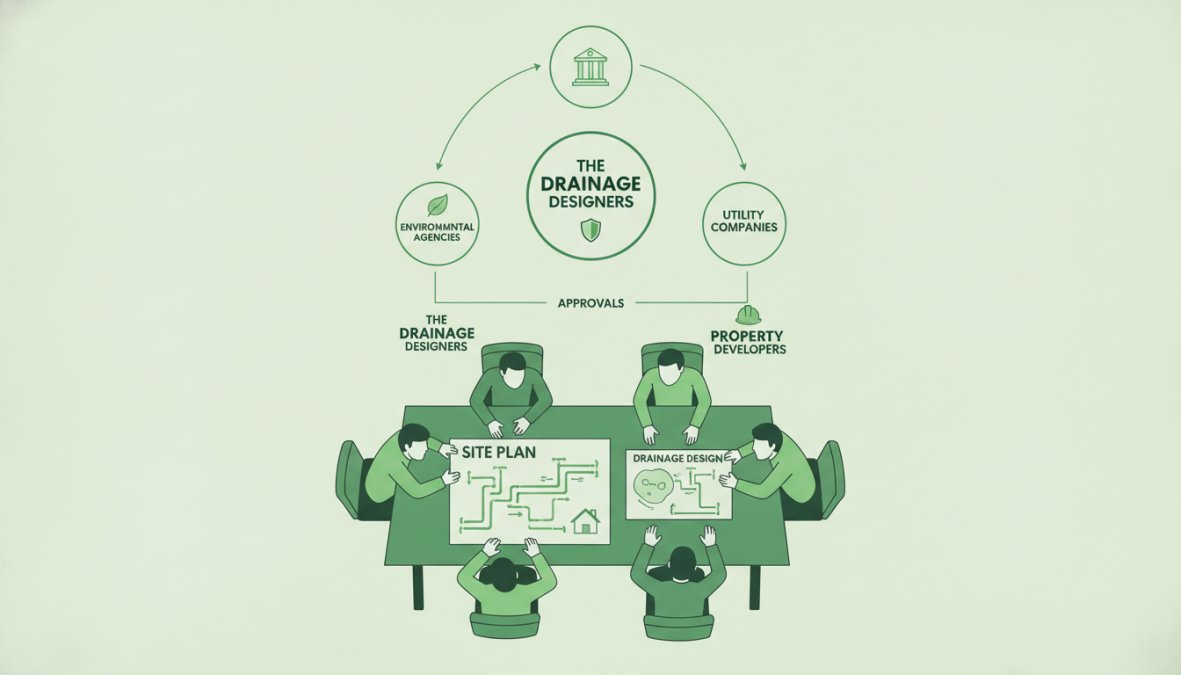
Successful drainage design requires effective collaboration with multiple stakeholders. Your consultant acts as a technical ambassador, explaining your design to regulators and negotiating solutions when concerns arise.
The primary regulator is the Local Authority’s planning department. The Lead Local Flood Authority reviews flood risk assessments and surface water drainage proposals. The water company reviews proposals to ensure they don’t overload existing infrastructure. For sites near watercourses, the Environment Agency may be involved.
Effective stakeholder collaboration requires clear communication, transparency about what’s being proposed, and genuine engagement with concerns. Your consultant’s credibility with regulators directly affects your project’s success.
Hiring Drainage Consultants: A Step-by-Step Process
| Stage | Action | Duration | Key Deliverable |
|---|---|---|---|
| 1. Define Requirements | Clarify project scope, site constraints, timeline | 1-2 weeks | Brief for consultants |
| 2. Identify Candidates | Research and shortlist experienced consultants | 1-2 weeks | List of 3-5 consultants |
| 3. Issue Tender | Provide consultants with project brief and request proposals | 2 weeks | Proposals and quotes |
| 4. Evaluate Proposals | Review qualifications, approach, cost, references | 1-2 weeks | Shortlist of 2-3 finalists |
| 5. Conduct Interviews | Meet finalists, ask detailed questions, check references | 2-3 weeks | Selected consultant |
| 6. Negotiate Terms | Agree scope, fee, timeline, reporting arrangements | 1 week | Signed engagement letter |
| 7. Commence Work | Consultant begins site assessment and feasibility study | Ongoing | Regular progress updates |
Initial Consultation and Scope Definition
Your first conversation with a potential consultant should clarify what you need. Provide basic project information: site location, proposed development type and scale, your timeline, and any known constraints.
A good consultant asks probing questions to understand your objectives. Are you trying to minimise costs? Maximise environmental benefits? Accelerate planning approval? Your priorities shape their approach. They should explain their methodology and be clear about what’s included in different fee options.
This conversation reveals whether the consultant understands your project and whether you’ll work well together. Do they listen or just talk? Will they be easy to work with over months of detailed design?
Project Delivery and Timeline Expectations
Feasibility studies typically take 4-8 weeks, depending on site complexity. Detailed design takes 8-16 weeks for straightforward projects, longer for complex schemes. Planning support timelines depend on regulator responses, a smooth approval process might take 4-8 weeks from submission to decision.
Your consultant should provide a detailed programme showing key milestones, decision points, and dependencies. They should flag risks and propose mitigation strategies. Regular communication is essential, most consultants provide monthly progress reports or more frequent updates if issues arise.
Drainage design demands specialist expertise. The right consultant accelerates your path to planning approval, delivers cost-effective designs, and protects your project from regulatory risks. At The Drainage Designers (Woodvale consulting Ltd), we bring two decades of experience navigating drainage requirements across the UK. Our team handles feasibility assessment, regulatory liaison, and design delivery from initial site visit through final approvals. If you’re planning a development and need drainage expertise you can trust, get in touch with The Drainage Designers (Woodvale consulting Ltd) to discuss your project requirements.
Frequently Asked Questions
What does a drainage consultant do for property developers?
A drainage consultant assesses site conditions, designs drainage systems, manages stormwater runoff, conducts flood risk assessments, and ensures regulatory compliance. They collaborate with local authorities and civil engineers to deliver drainage infrastructure that meets planning requirements and environmental sustainability standards, helping developers obtain timely approvals and avoid costly delays.
What qualifications should I look for when hiring drainage consultants?
Look for consultants with civil engineering credentials, experience in hydraulic modelling, and knowledge of local drainage acts and zoning regulations. They should have a proven track record on similar projects, understanding of sustainable drainage systems (SuDS), and familiarity with your region’s specific regulatory requirements. Professional memberships in engineering bodies add credibility.
How can a drainage strategy for planning applications improve approval rates?
A well-developed drainage strategy demonstrates to local authorities and lead local flood authorities that your development meets regulatory requirements and manages flood risk effectively. It shows proactive environmental responsibility, addresses surface water runoff, and integrates sustainable practices. This thorough approach reduces objections, speeds up the planning process, and increases the likelihood of first-time approval.
What is the typical cost of drainage consultancy for developers?
Drainage consultancy costs depend on project complexity, site size, location, and required studies. Factors include feasibility assessments, hydraulic modelling, flood risk analysis, and permit coordination. For accurate pricing tailored to your specific project scope and regional requirements, contact consultants directly for detailed quotations. Investment in professional advice typically prevents expensive design revisions later.
Why should developers consider sustainable drainage systems (SuDS) consultants?
SuDS consultants design environmentally responsible drainage solutions that reduce flood risk, manage stormwater naturally, and enhance site aesthetics. Many planning authorities now require or prefer SuDS integration. These systems improve environmental sustainability, reduce infrastructure strain, and often lower long-term maintenance costs whilst meeting modern regulatory expectations for responsible land development.