
How to Fix Garden Water Pooling: 7 Proven Solutions
Garden water pooling can quickly turn a beautiful outdoor space into a waterlogged mess. This guide from The Drainage Designers (Woodvale consulting Ltd) covers how to fix garden water pooling with seven proven solutions that address the root causes of standing water. Understanding the right approach for your specific situation makes all the difference.
Identify the Source of Water Pooling in Your Garden
The first step in solving garden water pooling is understanding why water collects in the first place. Many homeowners rush to drainage solutions without identifying the actual cause, which often leads to wasted effort and money.
Check your drainage patterns after rain
After the next rainfall, observe where water sits longest in your garden and mark these low spots with stakes or flags. The pattern of pooling reveals the underlying problem: water near downspouts suggests your gutter system needs extension; water in the middle of flat terrain indicates soil compaction; water appearing days after rain suggests poor soil percolation or a high water table.
Pro Tip
Take photographs of wet areas from the same angle each time it rains. Over several rainfall events, you’ll see a clear pattern of where water consistently pools, pinpointing exact locations needing intervention.
Assess soil type and compaction
Press a handful of wet soil from a pooling area. If it forms a tight ball that doesn’t crumble, you have clay-heavy soil. If it falls apart immediately, you have sandy soil. Test compaction by driving a metal rod or screwdriver into the ground. If it stops after a few inches, compaction is severe. Understanding your soil type and compaction level determines which solutions will work best.
Best Drainage Solutions for Gardens
Once you’ve identified why water pools, match the right solution to your specific conditions.
Assess your garden layout
Sketch a simple map showing high and low spots, existing drainage features, soil type zones, and pooling areas. Measure the slope of your garden using a level and measuring tape. A slope of 2-3% (about 60 centimetres drop per 30 metres) is ideal for natural water flow. Consider existing landscape features, mature trees, extensive planting, or structures may make some solutions impractical.
Match solutions to your space
The seven solutions work best in different scenarios. Aeration suits compacted soil in otherwise well-draining gardens. Regrading works when you have space to move soil. French drains suit areas with consistent low spots. Permeable pavers replace existing hardscaping. Rain gardens work in medium-sized pooling areas. Soil amendments improve drainage gradually. Moisture-loving plants complement rather than replace primary fixes.
For most gardens, combining two or three solutions works best. Aeration plus regrading often solves pooling in residential gardens.
Key Takeaway
The most effective fix combines addressing the immediate symptom (standing water) with the underlying cause (compaction, poor grading, or soil type).
How to Build a French Drain to Fix Water Pooling
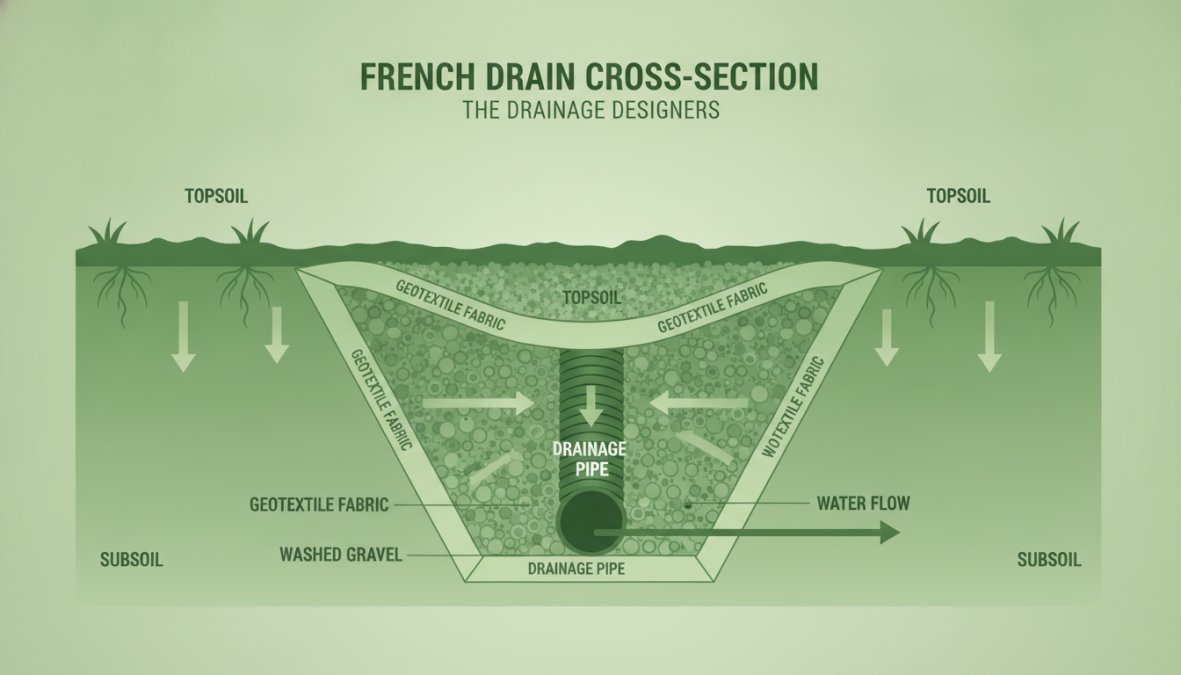
A French drain is one of the most effective subsurface drainage solutions for persistent garden water pooling.
Step 1: Plan your drain route
Determine the lowest point where water pools, this is where your French drain begins. Identify where you want water to exit, ideally downhill toward a street drainage system or dry well. You need at least a 1% slope (about 15 centimetres drop per 15 metres) for reliable water flow. Mark the route with chalk or spray paint, avoiding trees and underground utilities. Check with your local authority before digging.
Step 2: Dig the trench
Dig a trench 30-45 centimetres deep and 30 centimetres wide along your marked route, sloping gently toward the exit point. Check the slope frequently using a level. Remove large rocks and roots, smoothing the bottom so the drainage pipe sits evenly.
Step 3: Install the drainage pipe and gravel
Line the trench bottom with landscape fabric. Lay 5-8 centimetres of coarse gravel, then place perforated drainage pipe (10-15 centimetres diameter) with holes facing downward. Cover with another 5-8 centimetres of gravel. Fold landscape fabric over the gravel and cover with topsoil.
Watch Out
A common mistake is burying the drain too shallow or without adequate slope. Drains buried less than 25 centimetres deep freeze in winter climates. Drains without slope fill with standing water instead of moving it.
Garden Soil Drainage Improvement Techniques
Improving soil itself often eliminates pooling without major infrastructure changes.
Aerate compacted soil
Aeration breaks up compacted soil, creating pathways for water and air. For small areas, use a hand aerator. For larger gardens, hire equipment that removes 5-8 centimetre cores spaced 10-15 centimetres apart. Aerate in spring or autumn when soil is moist but not waterlogged. Many homeowners notice improved drainage within weeks, though aeration works best combined with soil amendments in severely compacted clay.
Add organic amendments
Spread 5-10 centimetres of compost across pooling areas and work it into the top 15-20 centimetres of soil. Organic matter improves soil structure and water percolation. For best results, add amendments annually. Over 2-3 years, repeated applications significantly improve drainage in problem areas.
Plants That Thrive in Wet Soil: An Alternative Approach
Rather than eliminating all pooling, embrace wet areas by planting moisture-loving species. Sedges, rushes, astilbe, hostas, and Japanese primrose tolerate standing water. This approach complements drainage solutions, transforming problem areas into attractive garden features.
Additional Drainage Methods: Regrading, Permeable Pavers and Rain Gardens
Regrade your garden to redirect runoff
Regrading reshapes your garden’s surface to direct water away from low spots. Even a 2-3% grade effectively moves water. The advantage is permanent results; once proper slope is established, water flows naturally. The disadvantage is moving large soil volumes and adjusting plantings and hardscaping.
Install permeable pavers
Permeable pavers replace traditional solid paving while allowing water to drain through. Water drains into a gravel reservoir beneath, where it percolates into soil. They work well in pathways, patios, and driveways, though initial installation costs are higher than traditional paving.
Create a rain garden
A rain garden is a shallow depression planted with moisture-loving species that captures and filters runoff. Typically 10-20 centimetres deep, it’s sized to hold the first 2-5 centimetres of rainfall from the catchment area. The bottom contains layers of mulch, sand, and gravel that filter water as it percolates. Rain gardens work best for moderate pooling areas where you have space to dig a shallow basin.
DIY vs Professional Drainage Solutions: Cost and Complexity
When to tackle it yourself
Simple solutions like aeration, soil amendments, and regrading are straightforward DIY projects. French drains are more complex but achievable for determined homeowners. DIY projects succeed when you invest time in proper planning, especially ensuring correct slope and using quality materials.
When to call a drainage specialist
Professional drainage specialists bring expertise that prevents costly mistakes. Complex situations with high water tables, severe compaction, or multiple pooling areas benefit from professional assessment. The Drainage Designers (Woodvale consulting Ltd) provides site visits and flood risk assessments, designs compliant systems, and secures local council approvals. Professional solutions cost more but eliminate the risk of expensive failures.
| Approach | Best For | Time Required | Skill Level |
|---|---|---|---|
| Aeration | Compacted soil in small areas | 1-2 days | Beginner |
| Soil amendments | Improving drainage gradually | Ongoing, 1 hour per season | Beginner |
| Regrading | Reshaping surface to redirect water | 2-5 days depending on scale | Intermediate |
| French drain (DIY) | Persistent pooling in accessible areas | 3-7 days | Intermediate |
| Permeable pavers | Replacing existing hardscaping | 2-5 days | Intermediate |
| Rain garden | Medium pooling areas with space | 2-3 days | Beginner to Intermediate |
| Professional drainage design | Complex sites, high water tables, council compliance | Varies | Professional |
Common Mistakes to Avoid When Fixing Garden Water Pooling
Ignoring the root cause is the most common error. Adding topsoil to a low spot might temporarily hide pooling, but if the underlying cause is compaction or poor slope, water will return. Always identify why water pools before selecting a solution.
Installing French drains without adequate slope causes failure. Many DIY French drain failures result from insufficient slope. Choosing the wrong solution for your soil type wastes resources, aeration helps clay soil but doesn’t address sandy soil issues. Underestimating the scope of work leads to incomplete solutions. Neglecting maintenance causes solutions to fail over time.
Watch Out
The most expensive mistake is installing major drainage without checking for underground utilities. Always contact your local authority’s utility location service before digging.
Standing water in your garden doesn’t have to be permanent. Whether you choose aeration, regrading, French drains, or a combination of solutions, addressing the underlying cause delivers lasting results. For complex sites, high water tables, or situations requiring council approval, The Drainage Designers (Woodvale consulting Ltd) provides expert assessment, compliant system design, and professional installation. Get in touch with The Drainage Designers (Woodvale consulting Ltd) for a site assessment and drainage solution tailored to your garden’s specific conditions.
Frequently Asked Questions
Why does water pool in my garden after rain?
Water pools in gardens due to poor drainage caused by compacted soil, clay-heavy earth, inadequate grading, or blocked drainage pathways. Standing water often accumulates in low spots where surface water cannot flow away naturally. Identifying whether the issue stems from surface runoff, poor soil percolation, or subsurface water table problems is essential before selecting a fix for garden water pooling.
Will a French drain fix water pooling in my garden?
A French drain is highly effective for managing subsurface water and redirecting runoff away from problem areas. This solution works by collecting water through a perforated pipe buried in a gravel-filled trench, directing it to a safe discharge point. French drains are particularly useful for gardens with persistent standing water caused by poor soil drainage or high groundwater, though they work best alongside soil amendments or regrading.
Can soil amendments help with garden drainage?
Yes, soil amendments significantly improve garden drainage, especially in clay-heavy or compacted soil. Adding organic matter like compost, aged bark, and peat improves soil structure and percolation rates, allowing water to drain more freely. Aeration combined with amendments opens air pockets in the soil, reducing water retention and promoting better root health whilst reducing standing water issues.
What plants thrive in wet soil if I cannot eliminate standing water?
Moisture-loving plants such as astilbe, hostas, sedges, and willows tolerate or prefer wet conditions. Planting these species in persistently damp areas transforms a drainage problem into a garden feature. This approach works well when water pooling is caused by a high water table or where structural drainage solutions are impractical, creating a rain garden aesthetic whilst managing excess water naturally.