
Why Foul Water Drainage Fails in Older Homes
Table of Contents
- Why Foul Water Drainage Systems Fail: The Main Causes
- Tree Roots in Drains: A Hidden Threat in Older Properties
- Blockages from Debris, Grease, and Build-Up
- Signs of Damaged Drains in Older Homes
- How Long Do Drainage Systems Last?
- What a Professional Drainage Inspection Reveals
- Foul-Water Drainage Versus Surface-Water Systems
- What Homeowners Should Do Now
- Frequently Asked Questions
Last Updated: October 6, 2026
Why Foul Water Drainage Systems Fail: The Main Causes
Foul water drainage fails in older homes for several interconnected reasons. At The Drainage Designers (Woodvale consulting Ltd), we’ve investigated properties where drainage systems have deteriorated, and the patterns are consistent. Understanding why foul water drainage systems fail is the first step toward protecting your property.
Most failures trace back to the age of the pipework. Homes built before 1970 used materials never designed to last beyond 50 to 80 years. Add ground movement, tree roots, and decades of debris, and you have a recipe for collapse.
Ageing Pipe Materials: Clay, Terracotta, Cast Iron and Pitch-Fibre
The materials used in older drainage systems deteriorate predictably. Clay pipes, common in Victorian and Edwardian properties, become brittle. Terracotta pipes crack under soil pressure. Cast-iron pipes corrode from the inside out.
These materials were fit for purpose when new. But after 60 to 80 years underground, they lose structural integrity. Soil movement and tree root pressure accelerate the process, and a pipe that held firm for decades can fail suddenly.
Identifying which material your home uses requires a professional drain survey. Visual inspection from ground level tells you nothing. Only CCTV footage reveals what’s happening inside the pipe.
Failed and Leaking Pipe Joints
Pipe joints fail long before the pipes themselves. Older systems used clay-to-clay connections held with lime mortar or simple mechanical joints, which shift when the ground moves even slightly.
Water seeps out of failed joints into the surrounding soil, weakening the ground beneath your foundations. Over time, you get subsidence, damp patches, and structural damage.
A single failed joint can trigger a cascade. Leaking water erodes the soil around neighbouring pipes, which then shift and fail, turning one joint failure into a system-wide collapse.
Cracked, Displaced, or Deteriorating Pipework
Cracks form for three main reasons: age, ground movement, and external pressure. A 70-year-old clay pipe is simply more brittle than a new one. Soil subsidence or heave displaces pipes by centimetres. Tree roots pressing against a pipe create stress points where cracks initiate.
Once a crack forms, it expands. Soil enters, the pipe weakens further, and blockages develop around the damaged section.
Displaced pipes lose their gradient, so wastewater moves more slowly, solids settle, and blockages follow.
Tree Roots in Drains: A Hidden Threat in Older Properties
Tree roots are drawn to drainage pipes because they offer moisture and nutrients.
This is one of the most common reasons foul water drainage systems fail in properties surrounded by mature trees. Oak, willow, and poplar trees are particularly aggressive.
Root intrusion happens gradually. You might notice slow drainage months before the pipe fully blocks, by which point the roots are well established. Mechanical clearing removes them temporarily, but they regrow unless the crack is sealed.
The only permanent fix is pipe replacement or relining. Clearing alone buys time.
Blockages from Debris, Grease, and Build-Up
Older drainage systems are narrower than modern ones. A 100-millimetre pipe leaves little margin for error. Grease, hair, and debris accumulate over decades. Even if the pipe itself is sound, blockages form.
Cooking oil poured down the sink solidifies as it cools, coating the inside of the pipe. More debris sticks to the grease until flow stops.
Tree leaves, soil, and other debris enter through damaged sections and lodge in low spots where the gradient is poor, developing blockages.
Regular drain cleaning helps but is not a cure. If the underlying pipe is cracked or deteriorating, blockages will return.
Signs of Damaged Drains in Older Homes
Recognising warning signs early can save thousands in emergency repairs. Drainage damage rarely announces itself loudly; it whispers through small, easy-to-miss symptoms.
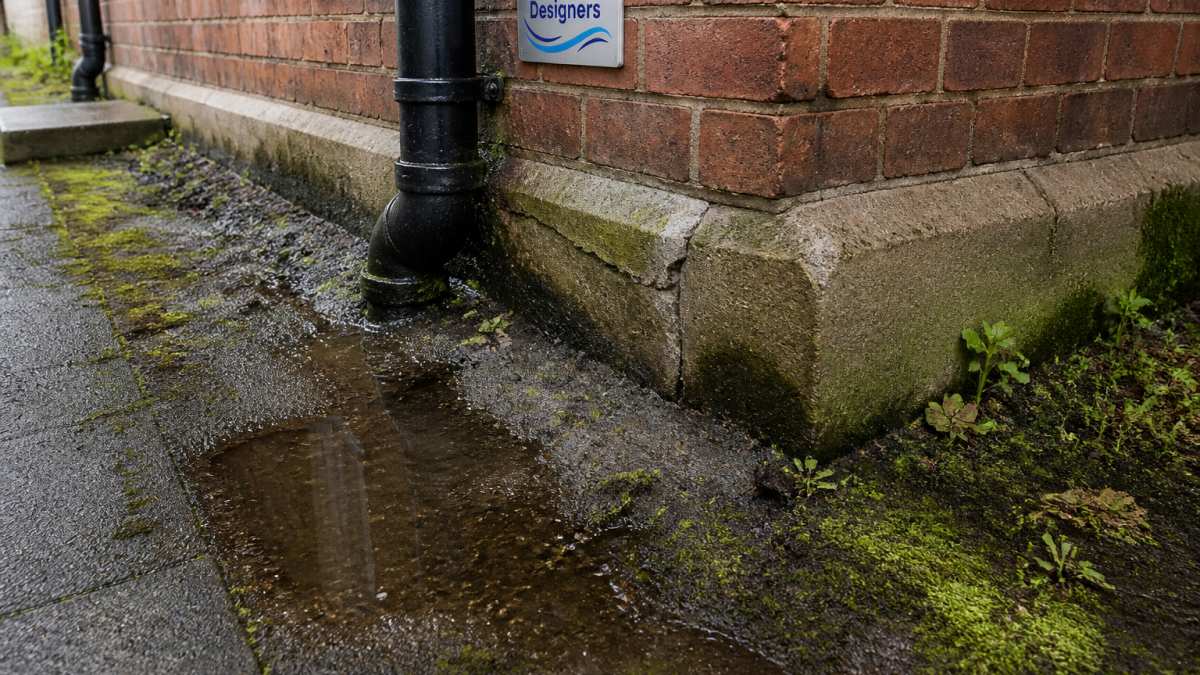
Foul Odours and Sewage Smells
A foul odour near your property is a clear warning sign that wastewater is leaking from the pipe into the soil. It is most noticeable after heavy rain, when the water table rises and pressure increases.
Sewage smells inside the house suggest a more serious problem. A broken trap, a crack in the main line, or a blocked vent pipe allows gases to escape indoors. This is not just unpleasant. It’s a health hazard.
Slow Drainage, Damp Patches, and Water Pooling
Slow drainage in multiple fixtures suggests a blockage or failure in the main line. If only one sink drains slowly, the problem is local; if your bath, shower, and toilet all drain slowly, the main system is compromised.
Damp patches in your garden, particularly near the house, indicate leaking pipes. The soil becomes waterlogged. Grass may die or turn unusually green in one spot. In winter, that area might not freeze when the rest of the garden does.
Water pooling after even light rain shows the ground cannot drain properly, often meaning a pipe is leaking or completely blocked.
How Long Do Drainage Systems Last?
Drainage systems have a finite lifespan. Understanding this helps you plan ahead rather than face emergency failures.
Clay and terracotta pipes typically last 50 to 80 years. Cast-iron pipes can last 75 to 100 years if not corroded.
If your home was built before 1970, your drainage system is likely at or past its expected lifespan. Even if it hasn’t failed yet, failure is increasingly probable.
A professional drainage survey gives a clear picture of remaining lifespan, so you can plan replacement or relining before catastrophic failure occurs.
What a Professional Drainage Inspection Reveals
A professional inspection transforms guesswork into certainty. You move from suspecting a problem to knowing exactly what you are dealing with, with the evidence needed to make informed repair decisions.
CCTV Drain Surveys and What to Expect
A CCTV drain survey uses a small camera on a flexible rod to inspect the inside of your pipes, transmitting video to a monitor. The surveyor identifies cracks, displaced sections, blockages, root intrusion, and corrosion. The footage is recorded and reviewed later, giving you a clear map of where problems exist and how severe they are.
Access is gained through inspection chambers or the main stack. No digging is required.
How to Interpret a CCTV Drain Survey
The survey report gives a condition grade for each section of pipe. Grades 1 and 2 indicate minor wear that can be monitored. Grade 3 means defects that should be addressed before they worsen. Grades 4 and 5 typically require urgent repair or replacement.
Common findings include:
- Hairline cracks: these may be sealed with epoxy resin lining if caught early.
- Displaced joints: these allow soil and roots to enter and usually need localised repair or relining.
- Root intrusion: roots must be cut and the entry point sealed.
- Corrosion in cast iron: internal corrosion reduces flow and weakens the pipe.
- Collapsed sections: these require excavation and replacement.
Before agreeing to any repairs, ask for the full video footage, the condition grading sheet, and a written recommendation explaining why each repair is necessary.
Repair Methods and Next Steps
Repair options depend on the severity and location of damage. Minor cracks can be sealed using epoxy resin lining, which requires no excavation.
For more extensive damage, relining with a cured-in-place liner may be appropriate.
Severe damage, such as collapsed or badly displaced pipes, requires excavation and replacement. This is disruptive and costly, but it is the only permanent solution for pipes that have lost structural integrity.
A professional surveyor will recommend the most cost-effective approach for your situation, explain the trade-offs between quick fixes and long-term solutions, and help you prioritise repairs if the budget is limited.
Always request the CCTV footage and condition grades in writing before authorising work. This protects you from unnecessary repairs and helps you compare quotes fairly.
Foul-Water Drainage Versus Surface-Water Systems
Many homeowners confuse foul-water drainage with surface-water drainage. They are separate systems with different purposes, and understanding which one you have is essential for diagnosing problems correctly.
Foul-water drainage carries wastewater from toilets, sinks, showers, and washing machines. It contains human waste and detergents and must reach a treatment works or septic tank.
Surface-water drainage carries rainwater from roofs and paved areas. It is clean water that can be discharged into local watercourses, soakaways, or public surface-water sewers.
Older properties often have combined drainage systems, where foul and surface water share the same pipe. Modern systems separate them.
Ownership and Responsibility for Shared Drains
In older properties, drains are often shared with neighbours.
Under the Water Industry Act 1991, sewerage companies are generally responsible for maintaining and repairing public sewers.
The situation is not always straightforward. If the shared drain is on your property but only serves your home, it is likely your responsibility.
To find out who is responsible, contact your local water company and ask for a copy of the sewer map, which shows which drains are public and which are private.
Records and History for Older Properties
Older properties often lack accurate drainage records. Original plans may be lost and later alterations undocumented, making it difficult to know where your drains run and what condition they are in.
A CCTV survey is the most reliable way to map your drainage system and identify shared connections. The surveyor traces the pipe route and notes junctions where other properties connect.
If you are buying an older property, a drainage survey is a worthwhile investment. It can reveal hidden problems a standard home survey might miss and gives you a clear picture of your responsibilities before you commit.
If you suspect a shared drain is blocked or damaged, do not attempt to clear it yourself. Contact your water company or a professional drainage contractor. Improper handling can cause further damage and may leave you liable for costs.
What Homeowners Should Do Now
If your property is older than 50 years, a professional drainage survey is a sensible investment.
The survey will tell you whether your system is sound or failing.
The Drainage Designers (Woodvale consulting Ltd) can arrange a site visit and CCTV survey, providing a detailed report with recommendations.
Don’t wait for sewage to back up into your home. By then, the damage is extensive and the repair bill is substantial.
Foul water drainage fails in older homes because the materials used decades ago have reached the end of their lifespan.
Frequently Asked Questions
What are the most common reasons foul water drainage systems fail in older homes?
Foul water drainage systems in older homes typically fail due to four main factors: ageing pipe materials like clay, terracotta, and cast iron that deteriorate over decades; tree roots that penetrate joints and cracks; blockages from accumulated grease, debris, and mineral deposits; and failed pipe joints that allow wastewater to escape or ground water to seep in. Victorian and Edwardian properties are especially vulnerable because their drainage infrastructure is often 100 to 150 years old and was not designed for modern water usage.
How can I tell if my older home has damaged drains?
Common warning signs include persistent foul odours from drains or garden areas, slow drainage in sinks and toilets, damp patches inside or outside the property, water pooling in the garden, and sewage smells near the foundation. You may also notice soft ground or unusual vegetation growth over the drain run. If you spot any of these signs, a professional drainage inspection using CCTV can identify the exact location and nature of the problem before it causes structural damage.
Can tree roots really damage old drainage pipes?
Yes, tree roots are a significant threat to older drainage systems. Roots are attracted to moisture and nutrients in wastewater and will exploit even tiny cracks or failed joints in clay, terracotta, or concrete pipes. Once inside, they grow and expand, blocking the pipe or causing it to collapse. The damage often worsens gradually, so blockages may recur repeatedly before the pipe fails completely. Older homes with mature trees nearby are at particular risk.
How long should a drainage system last, and when should I have mine inspected?
Most drainage systems are designed to last 50 to 100 years, depending on pipe material and soil conditions. Clay and terracotta pipes installed in Victorian homes are now well past their expected lifespan. If your home is over 50 years old, or if you notice any warning signs, a professional drainage inspection is advisable. Early detection of cracks, corrosion, or joint failure can prevent costly emergency repairs and property damage later.