
The One Thing That Delays SuDS Approvals Most (And How to Avoid It)
Most delays are not caused by complex hydraulics. They are caused by uncertainty. The planner or drainage officer cannot clearly see that the design is appropriate for the site, so they ask questions. Each question creates another round of drawings, notes, and approvals.
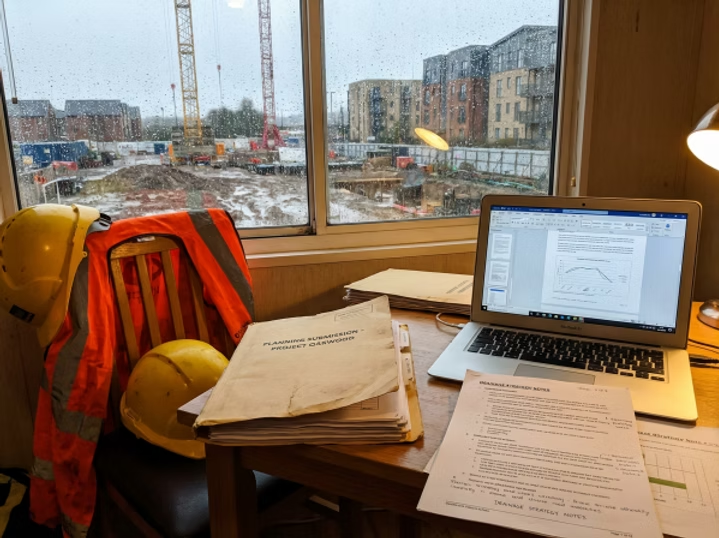
The most common root cause is a drainage strategy that does not join the dots. You might have a layout drawing, a few calculations, and a short note, but the submission does not explain the logic. It does not show what options were considered, what constraints exist, and why the final solution is the best available.
A strong SuDS submission makes three things obvious.
First, it shows the site constraints. Ground conditions, levels, outfalls, existing sewers, watercourses, and any limits on infiltration.
Second, it shows the decision path. If infiltration is not used, it explains why, with evidence. If discharge is proposed, it shows where to, and what rate, and why that rate is acceptable.
Third, it shows the future. Exceedance routes, safe flow paths, and a maintenance plan that is realistic for the party who will own it.
Another rule of thumb I use. If the submission does not answer the obvious questions, it will create avoidable delay.
If you want to speed up approvals, treat the drainage strategy as a story, not a bundle of outputs. A clear narrative saves time for everyone.