The simplest business case: rainwater harvesting reduces mains water demand (and helps you prove it)
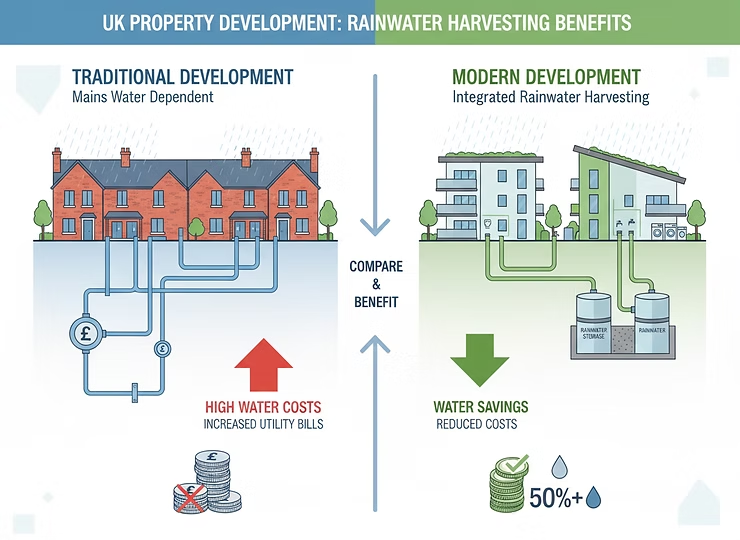
The National SuDS Standards are explicit that runoff should be treated as a resource, and they highlight rainwater harvesting where there is demand for non-potable water and sufficient contributing catchment area to deliver “safe and efficient water savings”. For developers, that’s a straightforward business case: if your building has predictable non-potable demand, you can design a system that reduces reliance on potable mains supply.
Non-potable uses commonly referenced in the standards include irrigation, and the standards note that rainwater harvesting should be considered across building types including industrial, commercial, public sector and residential. In practice, non-potable demand might include toilet flushing and irrigation, and the point is not to guess savings, but to design and evidence them.
The standards reference BS EN 16941 for rainwater harvesting systems intended for management of large rainfall events, and they also point designers toward demonstrating performance against an appropriate rainfall time series as set out in that standard. That’s important for developers: it pushes the conversation from vague claims (“it’ll save water”) to a documented approach (“this is how we sized it and what performance we expect”).
If you’re looking for market-ready solutions to evaluate, GRAF UK offers complete packages and a tank size calculator, while Rainwater Harvesting Ltd provides product options and educational resources that can support early feasibility and specification.