Key SuDS Components Explained
Understanding the Role of SuDS Components
The CIRIA SuDS Manual sets out a wide range of drainage components that can be used to manage surface water in a sustainable and integrated way. These components are not intended to be used in isolation but as part of a wider strategy that reflects the SuDS philosophy of managing water at source and gradually moving it through a site. Each component performs specific functions related to flow control, storage, or water quality, and when combined effectively, they form a robust and adaptable drainage system.
A key aspect of successful SuDS design is understanding how these components behave individually and how they interact as part of a management train. Their selection is influenced by factors such as site layout, topography, ground conditions, land use, and the level of treatment required. Designers are not simply choosing products but are shaping systems that must perform over the long term while also contributing to the wider environment.
Permeable Pavements: Integrating Drainage into Hard Surfaces
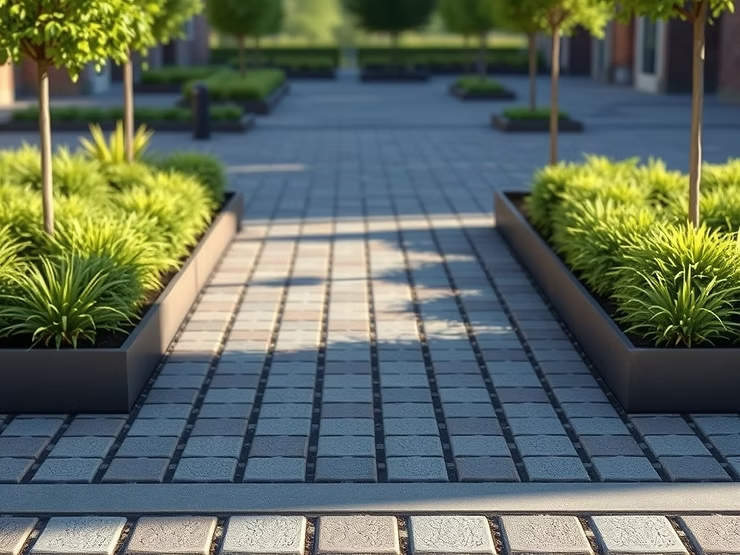
Permeable pavements are one of the most versatile and widely adopted SuDS features, particularly in residential and commercial developments. Unlike conventional impermeable surfaces, they allow rainfall to pass through the surface layer into a specifically designed sub-base. This sub-base provides temporary storage before the water either infiltrates into the ground or is conveyed to another part of the drainage system.
From a design perspective, permeable pavements are particularly valuable because they combine functionality with practicality. They allow areas such as car parks, driveways, and low-traffic roads to contribute to the drainage strategy without requiring additional land. In doing so, they support the principle of managing water at source and reduce the need for separate storage features elsewhere on the site.
They also provide an initial stage of water treatment. As runoff passes through the surface and aggregate layers, sediments and pollutants are filtered out, improving water quality before it reaches downstream components. This makes permeable paving an effective form of source control, particularly in urban environments where space is constrained.
Swales: Natural Conveyance and Treatment Features
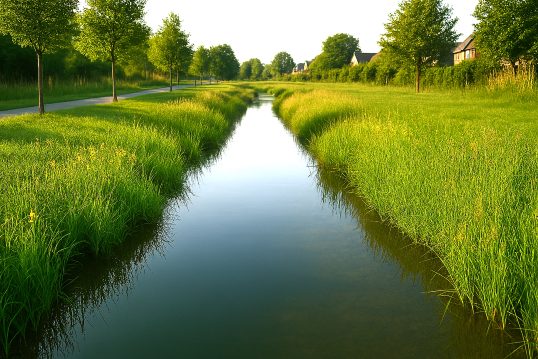
Swales are shallow, vegetated channels designed to convey water across a site while slowing its flow and providing treatment. They represent a clear example of how SuDS combines engineering with landscape design. Instead of relying on underground pipes, swales allow water to move visibly through the environment, creating opportunities for infiltration, sedimentation, and biological treatment.
The effectiveness of a swale lies in its geometry and vegetation. The shallow gradient reduces flow velocity, allowing suspended solids to settle out, while the vegetation helps filter pollutants and stabilise the soil. This makes swales particularly useful as part of the middle stages of a management train, where they receive partially treated runoff and provide further improvement before water reaches larger storage features.
From a design standpoint, swales offer significant flexibility. They can be incorporated into road verges, green corridors, or open spaces, and can be designed to enhance both the visual character of a development and its ecological value. However, they do require careful consideration of space, gradients, and maintenance, particularly in more constrained urban sites.
Detention Basins: Temporary Storage with Multi-Functional Potential
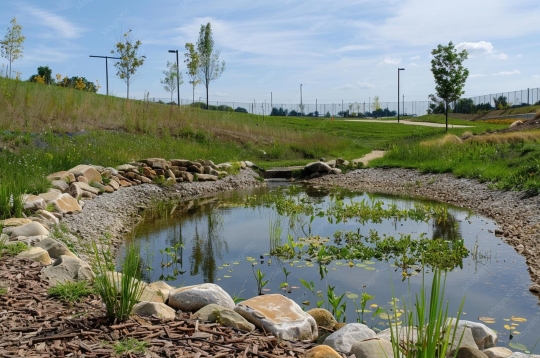
Detention basins are designed to provide temporary storage of runoff during rainfall events. They are typically dry under normal conditions and only fill during storms, gradually releasing water at a controlled rate. This makes them highly effective for managing peak flows and reducing flood risk downstream.
One of the key advantages of detention basins is their potential for multi-functional use. Because they remain dry most of the time, they can be integrated into public open space, serving as recreational areas, sports fields, or landscaped features. This aligns with the SuDS objective of enhancing amenity while delivering essential drainage functions.
Designing a detention basin requires careful attention to levels, storage capacity, and outlet controls. It must be capable of storing sufficient water during extreme events, including allowances for climate change, while also ensuring safe access and usability. When well designed, detention basins can become a positive and valued part of a development rather than purely an engineering necessity.
Attenuation Ponds: Permanent Water Bodies with Enhanced Benefits
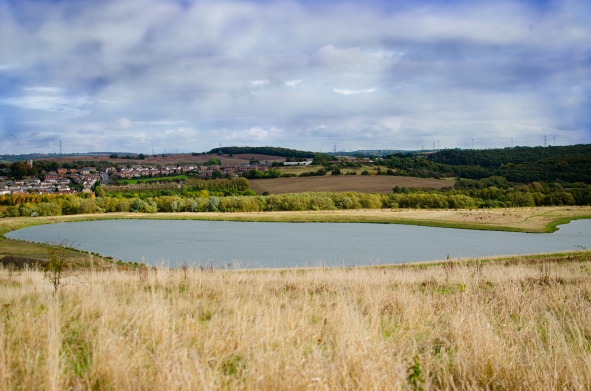
Attenuation ponds differ from detention basins in that they contain a permanent body of water, known as the permanent pool, with additional storage capacity above this level for storm events. This configuration allows ponds to provide both flow attenuation and enhanced water quality treatment.
The presence of standing water enables a range of natural processes, including sedimentation, biological uptake, and microbial activity, all of which contribute to improved water quality. As a result, ponds are often placed towards the latter stages of a management train, where they provide final treatment before discharge.
Beyond their functional role, attenuation ponds offer significant visual and ecological benefits. They can form focal points within a development, support aquatic habitats, and contribute to biodiversity. However, they also require careful design to address issues such as safety, access, and long-term maintenance. Edge design, depth profiles, and planting strategies all play a role in ensuring that ponds are both effective and appropriate for their setting.
Green Roofs: Managing Runoff at the Highest Level
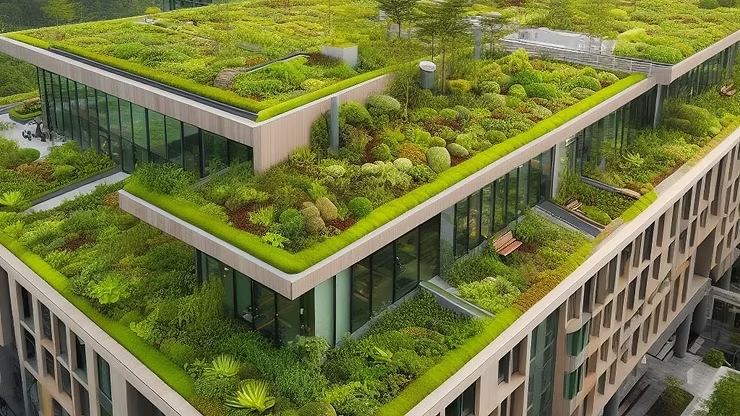
Green roofs represent one of the most effective ways to manage runoff at source, particularly in dense urban areas where ground-level space is limited. By incorporating vegetation and growing media on rooftops, they absorb rainfall, reduce peak flows, and delay the release of water into the drainage system.
Their performance depends on factors such as the depth of the substrate, the type of vegetation, and the overall design of the roof system. Extensive green roofs, which are relatively lightweight and low maintenance, are commonly used for drainage purposes, while intensive systems can provide more substantial ecological and amenity benefits.
In addition to their drainage function, green roofs contribute to insulation, reduce urban heat island effects, and support biodiversity. They are a strong example of how SuDS can be integrated directly into building design, reinforcing the importance of coordination between disciplines.
Filter Strips and Trenches: Providing Essential Pre-Treatment
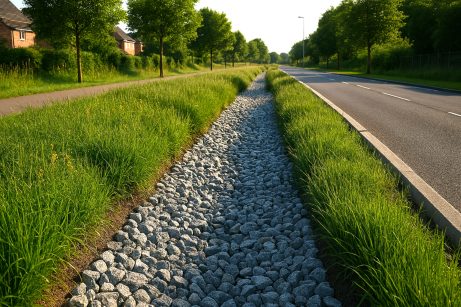
Filter strips and filter trenches are often used as early-stage components within the management train, providing pre-treatment for runoff before it enters larger systems. Filter strips are gently sloping vegetated areas that receive sheet flow from adjacent surfaces, allowing sediments to settle out and promoting infiltration.
Filter trenches, by contrast, are subsurface features filled with permeable material that store and convey water while also providing filtration. Both systems play an important role in protecting downstream components from excessive sediment build-up, which can reduce performance over time.
These features are particularly useful in situations where runoff originates from areas with higher levels of contamination or where additional treatment stages are required to meet water quality objectives.
Selecting the Right Components for Each Site
One of the key messages of the CIRIA SuDS Manual is that there is no single solution suitable for all sites. The selection of components should be guided by the specific characteristics and constraints of each development. Factors such as soil permeability, available space, topography, and intended land use all influence the suitability of different features.
Effective SuDS design involves combining components in a way that maximises their individual strengths while ensuring they work together as a cohesive system. This requires not only technical understanding but also a willingness to integrate drainage into the wider design process.
Creating a Cohesive and Resilient System
Ultimately, SuDS components should not be viewed as isolated elements but as parts of a connected system designed to manage water holistically. By carefully selecting and combining features, designers can create systems that control flow, improve water quality, and contribute positively to the built environment.
When applied effectively, these components support the broader aims of the SuDS Manual, delivering drainage solutions that are not only functional but also sustainable, resilient, and beneficial to both people and the environment.