
Best Drainage Solutions for Sloped Sites: 7 Proven Methods
Why Drainage Design Matters on Sloped Properties
When rainfall hits a sloped site, water flows downhill with force, eroding soil, destabilising foundations, and creating costly damage. Proper drainage solutions aren’t optional, they’re essential infrastructure that separates a stable property from one facing serious structural and environmental challenges.
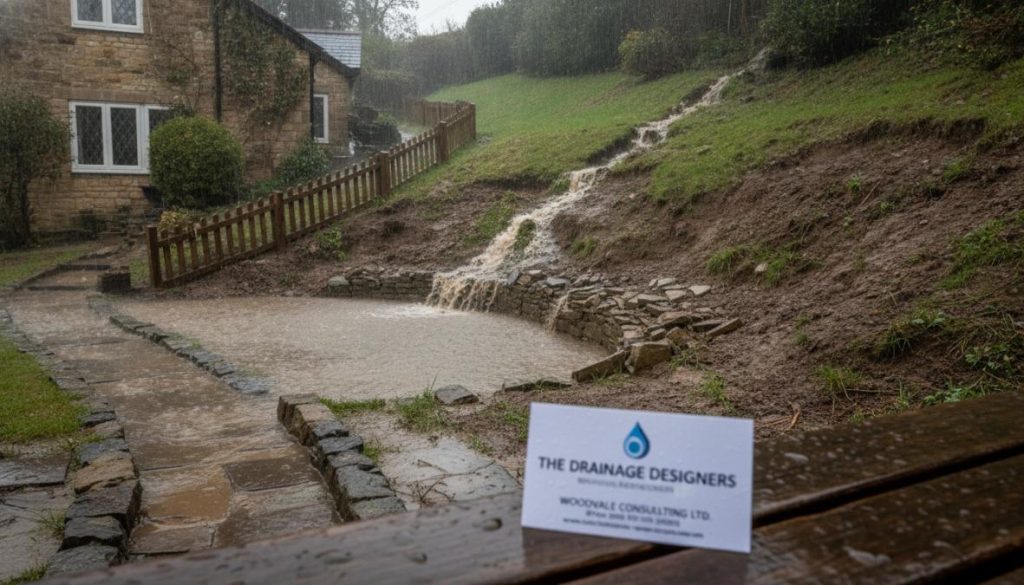
The core issue is hydrostatic pressure. Water accumulates beneath the surface, pushing against walls and foundations with increasing force. Without proper subsurface drainage, soil saturation leads to erosion, slope failure, and damage that can cost tens of thousands to repair.
This guide covers seven proven methods for managing water on sloped sites: French drains, channel systems, retaining walls, grading techniques, permeable materials, swales, and legal considerations.
1. French Drains and Subsurface Drainage Systems
French drains remain the most widely used subsurface drainage solution for sloped sites because they intercept groundwater before it causes damage. The system collects water through a perforated pipe buried in a gravel-filled trench, then channels it away from the problem area.
How French drains work on slopes
A French drain operates on a simple principle: gravity pulls water downward through soil layers until it hits the perforated pipe. The pipe sits at the lowest point of the trench, surrounded by landscape fabric and gravel that acts as a filter. Water passes through the gravel, enters the pipe through perforations, and flows toward a designated outlet, typically a downslope catch basin or daylight opening.
On sloped terrain, the pipe must follow the natural grade or be installed with a slight downslope (minimum 1% gradient) to ensure consistent flow. Modern alternatives like the NDS EZflow Gravel-Free French Drain System eliminate loose gravel, using engineered aggregate that resists compaction and maintains drainage capacity even under pedestrian traffic.
Pro Tip
The most common mistake is installing a French drain without proper outlet planning. A pipe that terminates in a low point on your property simply creates a new problem. Always trace where water will go before you dig.
Installation considerations for sloped terrain
Slope angle directly affects installation depth and pipe size. On gentle slopes (under 15% grade), a single French drain positioned upslope of the problem area often suffices. Steeper slopes may require multiple parallel drains.
Soil type matters enormously. Conduct a simple percolation test: dig a hole, fill it with water, and observe how quickly it drains. This tells you whether your soil can support a French drain or whether you need additional surface drainage solutions. The depth of installation depends on what you’re protecting, for a foundation wall, the drain should sit at or slightly below the footing level.
2. Channel Drains and Trench Drain Systems
Channel drains capture surface runoff before it infiltrates the soil, making them ideal for sloped hardscapes, driveways, patios, and pathways where water concentration poses an immediate erosion risk.
The NDS Dura Slope Channel Drain System exemplifies modern trench drain design. These modular plastic channels feature a built-in 0.7% slope, eliminating the need for extensive site grading. Sections snap together with interlocking joints, and you can choose from dozens of grate styles depending on your aesthetic preferences and load requirements.
On sloped sites, pre-sloped channels are transformative. Traditional concrete trenches require precise grading to maintain slope, which adds cost and complexity. For driveways on slopes steeper than 12%, pre-sloped plastic channels save both time and money.
A properly sized channel drain captures water during heavy rainfall before it spreads across the surface, preventing erosion and destabilisation of nearby structures.
Watch Out
Channel drains work only when properly connected to an outlet. A drain that terminates mid-property without a clear discharge point becomes a liability. Always plan the complete water path before installation.
3. Retaining Walls for Slope Stabilisation
Retaining walls do more than hold back soil, they integrate drainage to prevent the hydrostatic pressure that causes wall failure. A wall without proper drainage is essentially a dam holding back water, and dams fail when pressure builds.
Integrating drainage into wall design
The most critical drainage feature is the weep hole, small openings (typically 3-4 inches in diameter) placed at regular intervals along the wall’s base. Water that accumulates behind the wall escapes through these holes, preventing pressure buildup. Behind the wall, landscape fabric and a gravel drainage layer allow water to move freely toward the weep holes.
For steeper slopes or soils with poor drainage, a perforated drainage pipe runs along the wall’s base, collecting water and directing it to a lower point. The pipe outlet must be above the water table and clear of obstructions, ideally a daylight outlet or connection to a catch basin.
For most residential applications, a conventional retaining wall with proper drainage performs well. The ACO K100 Pre-Sloped Trench Drain System integrates seamlessly with wall bases, providing high hydraulic capacity in a compact footprint.
4. Grading and Re-sloping Techniques
Sometimes the simplest solution is reshaping the land itself. Grading redirects water away from structures and toward natural drainage paths or designated outlets.
The goal is to create a landscape that naturally sheds water by establishing a minimum 2% slope away from buildings (1 inch of drop per 50 feet of horizontal distance). For steeper natural slopes, you may need to install benches, level or nearly level areas cut into the slope at intervals, to slow water movement and allow infiltration.
Re-sloping is labour-intensive but often the most cost-effective long-term solution. Instead of installing drainage systems to fight gravity, you work with it. A properly re-sloped site requires minimal ongoing maintenance and handles rainfall naturally. For slopes steeper than 30%, re-sloping alone won’t solve drainage problems, you’ll need to combine it with terracing, retaining walls, or subsurface drainage systems.
5. Permeable Materials and Erosion Control
Permeable pavers and landscape fabrics work together to manage water at the surface while allowing infiltration into the soil below. This approach is particularly effective on slopes where you want to reduce runoff velocity without creating impervious surfaces.
Permeable pavers and landscape fabric
Belgard Permeable Pavers exemplify this technology. These interlocking concrete units have gaps that allow rainwater to permeate through the paver joints into a graded aggregate base beneath. For slopes up to approximately 15%, permeable pavers provide a stable surface whilst managing stormwater.
Water doesn’t run across the surface, it infiltrates immediately. This reduces erosion, recharges groundwater, and improves water quality by filtering pollutants through the gravel base. Installation requires a properly designed aggregate base of 4-6 inches of gravel compacted in layers, with landscape fabric beneath to prevent fine soil particles from migrating into the gravel base whilst allowing water to pass freely.
Geotextile fabric serves multiple functions on sloped sites: it prevents soil erosion by stabilising the upper soil layer, filters water to keep sediment out of drainage systems, and separates different soil layers.
Key Takeaway
The difference between a successful permeable system and a failed one often comes down to the base layer. A poorly compacted or improperly graded base allows water to pool rather than infiltrate.
6. Swales, Dry Creek Beds, and Water Diversion
Swales and dry creek beds are landscape features that channel water whilst enhancing aesthetic appeal. A swale is a shallow, vegetated channel that guides surface runoff toward a designated outlet. Vegetation slows water movement, allowing infiltration and filtering sediment before water reaches downstream areas.
A dry creek bed mimics a natural watercourse. Stones and gravel fill the channel, creating visual interest whilst maintaining drainage function. Both require proper grading to function, the channel must slope continuously toward the outlet. For slopes steeper than 20%, install check dams (small stone or wood barriers placed perpendicular to the channel) to slow water velocity and prevent erosion.
Erosion control blankets, made from straw, jute, or coconut fibre, protect newly graded slopes whilst vegetation becomes established. These biodegradable mats stabilise soil, prevent erosion, and help seeds germinate, typically lasting 6-12 months before decomposing.
Best Drainage Solutions for Sloped Sites: Legal and Climate Considerations
Planning permission and local authority requirements
Before installing any drainage system, understand your local authority’s requirements. Many councils require planning permission or building regulation approval for drainage work, particularly if you’re modifying surface water discharge or installing systems near property boundaries.
The Environmental Permitting Regulations govern how surface water must be managed. Most councils now require sustainable drainage systems (SuDS) for new developments and major renovations, prioritising infiltration, followed by attenuation, then discharge to watercourses or sewers.
Your local Lead Local Flood Authority (LLFA) provides specific guidance on drainage design. Water discharge to neighbouring properties is a complex legal issue. If your drainage work causes water to flow onto a neighbour’s land, you may be liable for damage. Always obtain written confirmation from your local authority before breaking ground.
Watch Out
Planning permission for drainage work can take 8-12 weeks. Starting work before approval is obtained can result in enforcement action and forced removal of systems.
Climate-specific drainage design
Climate fundamentally affects drainage design. In areas with high annual rainfall, you need larger capacity systems. In areas with extended dry periods, infiltration-based systems work well. In areas prone to freeze-thaw cycles, materials must withstand repeated freezing without cracking.
The UK’s variable climate, with wet winters and drier summers, favours systems that handle peak winter rainfall whilst allowing infiltration during other seasons. French drains work well across the UK because they handle both high-volume discharge and seasonal variation. Permeable surfaces also perform well, though in areas with heavy clay soils, infiltration rates may be slow enough to require additional surface drainage.
| Drainage Method | Best Climate | Installation Complexity | Maintenance Frequency |
|---|---|---|---|
| French drains | High rainfall areas | Moderate | Quarterly inspection |
| Channel drains | All climates | Low | Seasonal cleaning |
| Retaining walls | Steep slopes, variable rainfall | High | Annual inspection |
| Permeable pavers | Moderate rainfall areas | Moderate | Annual top-up of joint material |
| Swales and dry creek beds | All climates | Low | Seasonal vegetation management |
| Erosion control blankets | Areas with new slopes | Low | None (biodegradable) |
Choosing the Right Solution for Your Slope
The best drainage solutions depend on three factors: site conditions, budget, and long-term maintenance capacity.
For gentle slopes (under 15%) with good soil drainage, grading and permeable surfaces often suffice. For steeper slopes or poor drainage soils, you’ll need subsurface systems like French drains. For hardscapes on slopes, channel drains prevent water concentration and erosion. Most effective solutions combine multiple approaches, a typical sloped site might include grading to direct surface water toward a swale, a French drain upslope of structures to intercept groundwater, and permeable surfaces in high-traffic areas.
Pro Tip
Start with a professional site assessment. A drainage engineer can identify subsurface water movement that you can’t see. This information transforms guesswork into precision design.
Effective drainage on sloped sites requires understanding how water moves through soil and across the surface, then designing systems that work with gravity. The seven methods covered here address different aspects of water management. Contact The Drainage Designers (Woodvale consulting Ltd) for a professional assessment. Our team conducts site visits, analyses flood risk, and designs drainage systems that secure local council approval and deliver long-term performance across the UK.
Frequently Asked Questions
What are the best drainage solutions for sloped sites?
The best drainage solutions for sloped sites depend on your terrain and goals. French drains manage subsurface water and hydrostatic pressure, whilst channel drains capture surface runoff. Retaining walls with integrated weep holes stabilise slopes, and permeable materials reduce erosion. Grading adjustments and swales redirect water naturally. Professional assessment ensures your chosen method complies with local authority requirements and manages both water table issues and soil saturation effectively.
How do French drains prevent water saturation on slopes?
French drains work by collecting groundwater through a perforated drainage pipe surrounded by landscape fabric and gravel. On sloped sites, they’re positioned to intercept water moving downhill before it causes soil saturation. The pipe directs water away from the slope, reducing hydrostatic pressure and erosion risk. Proper slope and pipe sizing ensure continuous water flow, protecting your property from waterlogging and foundation issues.
Do I need planning permission for drainage work on a sloped garden?
Planning permission requirements vary by local authority and project scope. Minor drainage improvements like adding gravel or swales may not require approval, but retaining walls, channel drains, and significant grading changes often do. You must also comply with Lead Local Flood Authority requirements and ensure water isn’t diverted onto neighbouring properties. Consulting your local council before work begins prevents costly rejections and ensures your design meets all zoning and environmental standards.
What’s the difference between French drains and trench drains for slopes?
French drains handle subsurface water and groundwater, using perforated pipe and gravel to manage water table issues and soil saturation below the surface. Trench or channel drains capture surface runoff from hardscapes and graded areas, directing it away quickly. On sloped sites, both are often used together: channel drains at the top and sides catch rainfall, whilst French drains manage deeper groundwater. Your choice depends on whether your primary concern is surface water or subsurface drainage.
How often should slope drainage systems be maintained?
Maintenance frequency depends on your system type and climate. Channel drains and catch basins need quarterly cleaning to prevent debris blockages, especially after storms. French drains require annual inspection for sediment buildup and landscape fabric integrity. Swales and gravel areas benefit from annual raking and top-up of materials. In high-rainfall regions, increase inspections to twice yearly. Regular upkeep prevents system failure, maintains proper water flow, and extends the lifespan of your drainage investment significantly.