
Why Is My Garden Always Boggy After Rainfall
Table of Contents
- Causes of Waterlogged Gardens
- Signs of Poor Garden Drainage
- How to Improve Clay Soil Drainage
- Practical DIY Solutions for Boggy Gardens
- Do I Need Professional Drainage Design
- Seasonal Maintenance to Prevent Boggy Conditions
- Conclusion
Last Updated: August 28, 2026
Causes of Waterlogged Gardens
Why is my garden always boggy after rainfall? The answer usually lies in one of three interconnected problems: soil structure, soil type, or the water table itself. Understanding which one affects your garden is the first step toward fixing it.
Poor soil structure and compaction
Soil compaction is one of the most common culprits behind persistent waterlogging. When soil particles are pressed tightly together, they lose the air spaces that allow water to drain through. This happens gradually over time as foot traffic, heavy machinery, or repeated use of the same paths compacts the topsoil layer by layer.
New-build properties face a particular challenge. During construction, heavy vehicles move across the site, excavators dig foundations, and materials are stockpiled on what will become your garden. By the time the house is finished, the soil beneath may be severely compacted. Unlike an established garden where you can work gradually to improve drainage, new builds often need immediate intervention to avoid years of boggy conditions.
The real problem with compacted soil is that it doesn’t just slow drainage, it actively prevents it. Water sits on the surface rather than infiltrating downward. You’ll notice puddles forming quickly after rain and disappearing slowly, if at all. The soil feels hard and dense when you try to dig, and plant roots struggle to penetrate more than a few centimetres.
Clay soil and water retention
Clay soil holds water far more effectively than sandy or loamy soils. Clay particles are extremely small and pack tightly together, leaving minimal space for water to move through. Once saturated, clay soil drains very slowly, sometimes taking days or weeks to release water even after rain has stopped.
The challenge with clay-heavy gardens is that you cannot simply dig your way out of the problem. Adding sand to clay creates concrete-like material. You need to fundamentally change the soil structure by introducing organic matter and, in severe cases, installing drainage systems that bypass the clay entirely.
Many gardeners with clay soil report that their garden is boggy for months after winter rainfall, even when other gardens in the area have drained. This is the clay soil effect at work.
High water table and groundwater
Sometimes the problem is not your soil or its structure, but what lies beneath. A high water table means that groundwater is close to the surface. During heavy rainfall, the water table rises further, and groundwater seeps upward into the root zone. Your garden becomes boggy not because rain cannot drain away, but because groundwater is coming up from below.
Identifying a high water table requires a simple test. Dig a hole about 60 centimetres deep and observe it over several days. If water appears in the hole without rain, you have groundwater. If the water table is consistently within 30-60 centimetres of the surface, you will struggle with waterlogging unless you install a proper drainage system (gov.uk).
Properties near rivers, in valley bottoms, or in areas with clay subsoil are most vulnerable to high water tables. You cannot fix this with soil improvement alone. You need to intercept and redirect the groundwater using French drains, soakaways, or professional-grade drainage design.
Signs of Poor Garden Drainage
Identifying whether your garden has a genuine drainage problem or just temporary waterlogging after heavy rain helps you choose the right solution.
Identifying waterlogging symptoms
Waterlogged soil feels spongy and squelches underfoot. When you step on it, water oozes from the surface. The soil often smells of decay or sulphur, a sign that anaerobic bacteria are active in oxygen-starved conditions. Plant roots cannot survive in waterlogged soil for more than a few days, so you may notice yellowing leaves, wilting, or root rot even when the soil is wet.
Persistent puddles are the clearest sign. If water pools in the same spots after every rainfall and takes more than 24 hours to disappear, you have a drainage problem. Moss and algae thrive in these conditions, so a garden that turns green and slippery is often waterlogged.
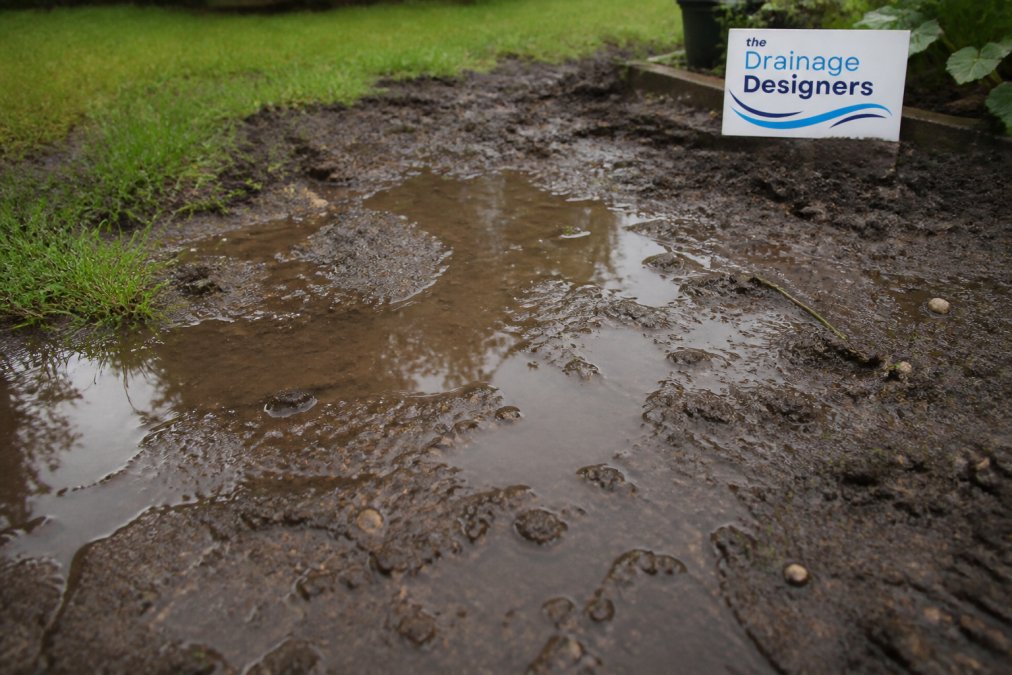
Compacted soil shows different symptoms. The ground feels hard and impenetrable. Digging reveals a distinct layer where soil changes texture, often a hard crust a few centimetres down. Grass may be thin or patchy because roots cannot penetrate the compacted layer.
Testing your soil drainage
The percolation test is simple and revealing. Dig a hole about 30 centimetres deep and 15 centimetres across. Fill it with water and time how long it takes to drain. If water drains within a few hours, drainage is adequate. If it takes more than 24 hours, you have a drainage problem (rhs.org.uk).
Alternatively, observe your garden during and after rainfall. How quickly does water disappear from the surface? Does it soak in steadily, or does it pool and run off? Does the ground remain wet for days afterward? A third test checks for compaction: push a metal rod or screwdriver into the soil. If it slides in easily to 20-30 centimetres, compaction is not severe. If it stops after 5-10 centimetres, compaction is likely the problem.
How to Improve Clay Soil Drainage
Improving drainage in clay soil requires patience and persistence, but the results are worth the effort. The goal is to increase the soil’s ability to transmit water downward and create pathways for water to escape.
Aeration and soil structure improvement
Aeration physically breaks up compacted soil and creates air spaces. For small areas, a garden fork works well: push it into the soil and rock it back and forth without lifting the turf. This process, called spiking, is best done in autumn when the soil is moist but not waterlogged.
For larger areas or severe compaction, mechanical aeration may be necessary. Hollow-tine aerators remove small cores of soil, leaving channels for water and air to penetrate. This is more effective than solid-tine spikes because it actually removes soil rather than just compressing it sideways. Once you have created air spaces, water moves through them more easily and roots can penetrate deeper.
Adding organic matter and topsoil
Organic matter is the single best amendment for clay soil. Compost, well-rotted manure, leaf mould, and bark chips all improve soil structure by creating stable aggregates. These clusters of soil particles create larger pores that allow water to drain whilst retaining enough moisture for plant roots.
Spread 5-10 centimetres of compost or well-rotted manure over the garden and work it into the top 15-20 centimetres of soil (rhs.org.uk). Repeat this process annually. Over several years, even heavy clay will become noticeably more workable and better draining.
For new-build properties with severely compacted subsoil, consider importing new topsoil. If the existing soil is too damaged, removing the top 15-30 centimetres and replacing it with quality topsoil and compost can be faster than rehabilitating what is already there.
Practical DIY Solutions for Boggy Gardens
Before calling in professionals, several DIY approaches can significantly improve drainage. These work best for surface water and moderate waterlogging rather than high groundwater or severe compaction.
Installing a soakaway or French drain
A soakaway is a simple but effective solution for collecting and dispersing surface water. Dig a pit about 1 metre deep and 1 metre across in the lowest part of your garden. Line it with geotextile membrane and fill it with gravel or rubble. Water drains into the soakaway and percolates slowly into the surrounding soil.
A French drain is more sophisticated. Dig a trench along the line where water pools, sloping gently downhill. Line the trench with geotextile membrane, fill the bottom 10 centimetres with gravel, lay perforated land drain pipe on top, cover with more gravel, and fold the geotextile over the top. Water enters the perforations and flows along the pipe to a soakaway or outfall.
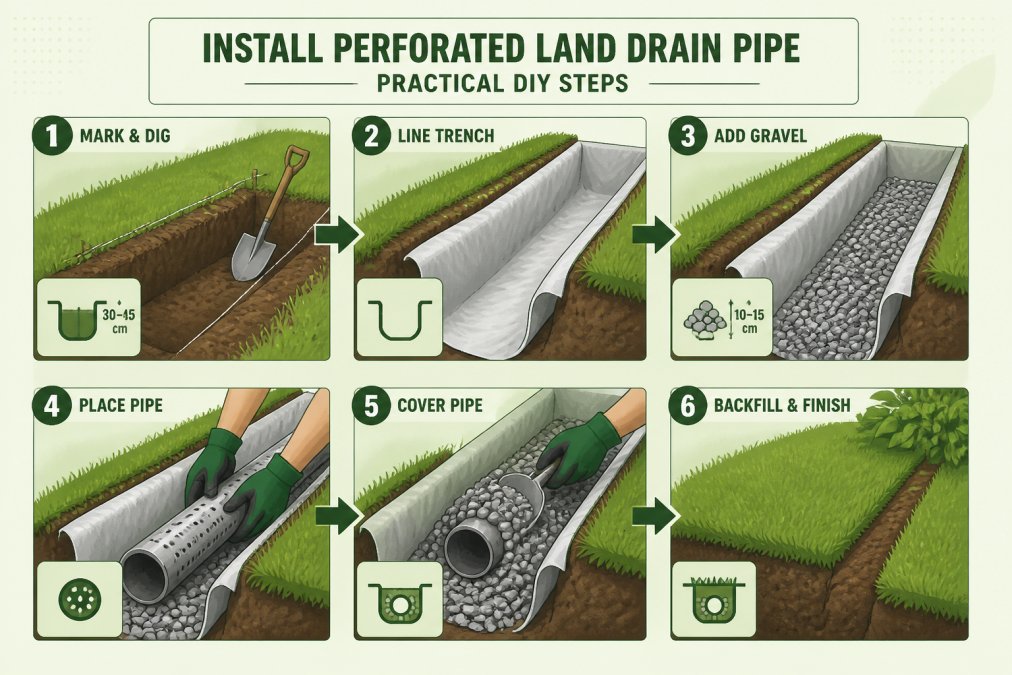
The key to success is ensuring water can reach the drain. If the drain sits in compacted clay, water will not reach it. You may need to aerate the surrounding soil or add a layer of sand and gravel above the pipe to create a permeable path for water.
Regrading and creating drainage channels
Regrading means reshaping the garden to direct water away from problem areas. If water pools in a low spot, you can raise that area slightly and create a gentle slope towards a soakaway or outfall. A slope of just 1 in 50 (2 centimetres drop per metre) is enough to encourage water movement.
Drainage channels can be shallow swales (vegetated channels) or formal drains. A swale is essentially a shallow ditch planted with water-tolerant plants. It slows water flow, allowing infiltration, whilst looking like a natural landscape feature.
Using permeable surfaces and materials
Hard surfaces like patios and driveways prevent water infiltration and increase runoff. Replacing them with permeable alternatives reduces the volume of water that needs to drain elsewhere.
Permeable pavers, gravel, and permeable concrete all allow water to pass through. Gravel is the cheapest option and works well for paths and driveways. Permeable pavers are more durable and look more finished. Both require a base layer of sand and gravel to function properly. Converting even 20-30 square metres of patio to permeable materials can noticeably reduce waterlogging in the rest of the garden.
Do I Need Professional Drainage Design
The question many homeowners ask is whether their problem requires professional help or whether DIY solutions will suffice. The answer depends on the severity, the cause, and whether planning approval is needed.
When to call in the experts
Professional drainage design becomes necessary when DIY solutions have failed, when the problem is severe, or when the cause is complex. High groundwater cannot be fixed with aeration and compost. You need a properly designed system to intercept and manage groundwater.
New-build properties often benefit from professional design even if the problem seems minor. The soil is typically severely compacted and may have contamination from construction. A professional site visit and assessment can identify issues that are not obvious and recommend solutions that prevent years of problems.
Planning approval is another trigger. If you are installing a French drain that discharges to a neighbouring property, or if you are regrading significantly, you may need approval from your Local Authority or Lead Local Flood Authority. Professional designers understand these requirements and can prepare the necessary applications.
The Drainage Designers (Woodvale consulting Ltd) specialises in exactly this situation. A site visit identifies the cause of waterlogging, assesses whether DIY solutions will work, and if professional design is needed, prepares compliant drawings and secures the necessary approvals.
Compliance and planning requirements
Sustainable Drainage Systems (SuDS) are now a requirement for most new developments and extensions. SuDS prioritise infiltration and surface water management over traditional piped drainage. If your project requires planning approval, the Local Authority will expect you to demonstrate that you have considered SuDS.
Discharging water to a neighbouring property or to a public sewer requires consent and often formal design. A French drain that discharges to your neighbour’s land without agreement can create legal liability. Professional design ensures compliance and prevents disputes.
Flood risk assessments may be required if your property is in a flood-risk area or if your development increases flood risk elsewhere. This requires specialist knowledge and access to flood data held by the Environment Agency.
Seasonal Maintenance to Prevent Boggy Conditions
Preventing waterlogging is easier than fixing it once it has damaged your garden. A simple maintenance routine keeps drainage systems working and soil structure improving year after year.
Autumn is the critical season. Aerate in September or October when soil is moist but not waterlogged. Apply compost or well-rotted manure in October or November. Clear gutters and downpipes so that roof water drains properly. Check that soakaways and drains are not blocked by leaves or sediment.
Winter brings heavy rainfall. Monitor your garden during and after rain. Does water drain within 24 hours? Are any new puddles forming? Spring is the time to repair any damage. If plants have rotted or died, replace them with more water-tolerant varieties. Top up compost if it has settled. Check that any drainage works you installed are still functioning.
Consistency matters. A single application of compost helps, but repeated applications over several years transform clay soil. A soakaway installed once is useful, but only if you keep it clear of debris. Gardens that stay well-drained are those where maintenance is regular and seasonal.
Why is my garden always boggy after rainfall? In most cases, the answer is fixable without expensive intervention. Compacted soil responds to aeration and organic matter. Clay soil improves with patience and repeated amendment. Surface water can be managed with simple drains and regrading.
Where the cause is more complex, where planning approval is needed, or where DIY solutions have not worked, professional drainage design becomes valuable. The Drainage Designers (Woodvale consulting Ltd) provides site visits, flood risk assessments, and compliant drainage design tailored to your specific situation. Get in touch to discuss your garden’s drainage challenge and explore the solutions that will work for your property.
Frequently Asked Questions
What causes my garden to stay waterlogged after heavy rainfall?
Waterlogging typically results from poor infiltration rates caused by clay soil, soil compaction, or a high water table. Clay particles are small and tightly packed, restricting water movement through the topsoil and subsoil. Compacted soil further reduces drainage capacity. If your garden sits in a low spot or has a high groundwater level, surface water cannot drain away effectively, leading to persistent puddling and boggy conditions.
How can I test if my garden has poor drainage?
Dig a hole about 30 centimetres deep and fill it with water. If the water drains within 24 hours, your drainage is adequate. If water remains after 24 hours, you have poor drainage. You can also observe whether puddles form after rain or if your lawn stays saturated for days. Root rot in plants and moss growth are additional signs of waterlogged soil affecting your garden health.
Can I fix a boggy garden myself, or do I need professional drainage design?
Simple improvements like adding organic matter, aeration, or installing a soakaway may resolve minor drainage issues. However, if your garden is consistently waterlogged, you have a high water table, or you're planning a new build or extension requiring planning approval, professional drainage design is essential. Professionals assess groundwater levels, soil structure, surface runoff patterns, and local authority requirements to create compliant, long-term solutions that protect your property.
What is the fastest way to improve drainage in a boggy garden?
Installing a French drain or soakaway offers rapid improvement for surface water. For clay soil, aerating the lawn and incorporating organic matter helps increase infiltration rates. Regrading to redirect water away from low spots prevents puddling. For permanent solutions, particularly on new builds or extensions, professional drainage design ensures systems meet Local Authority and Lead Local Flood Authority standards, preventing future waterlogging and supporting long-term garden health.
This article was written using GrandRanker