
Infiltration in SuDS (When It Works, When It Fails, And What Evidence You Need)
Infiltration is often treated as the default answer, but it is only a good answer when the ground conditions support it. When it is forced onto a site without evidence, it becomes a planning risk and a construction risk.
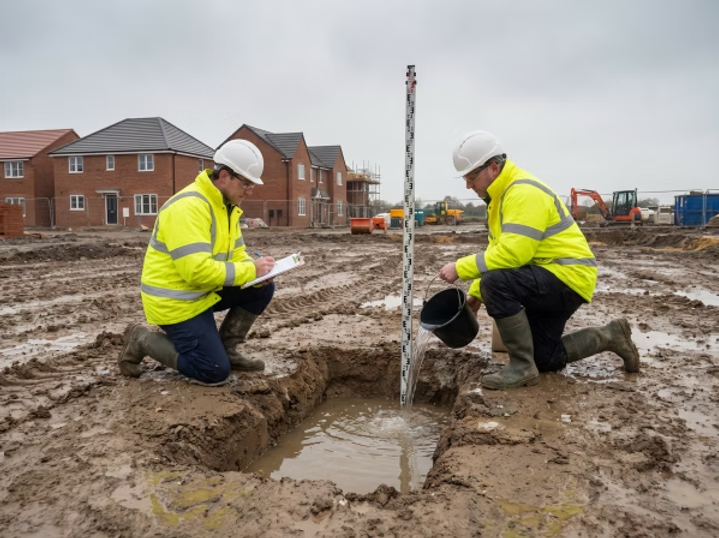
Infiltration works well when soils can accept water at a reliable rate, groundwater levels are suitable, and there is enough space to build features like soakaways, infiltration basins, or permeable paving sub bases. It can also work well when the design team plans early and tests early.
Infiltration becomes risky when the ground is variable, when groundwater is high, when there are contamination concerns, or when there is limited space and the system is pushed to its limits.
From a planning perspective, the key is evidence. If you propose infiltration, you need to show the testing and the assumptions. If you do not propose infiltration, you need to show why it is not feasible.
From a delivery perspective, you also need to think about buildability. Can the contractor actually build the infiltration feature as designed. Will it be protected from silt during construction. Who will maintain it.
A practical tip. If infiltration is likely, schedule infiltration testing early enough that it can shape the layout, not just confirm it.