Biodiversity Net Gain Meets SuDS: Maximising Environmental Benefits
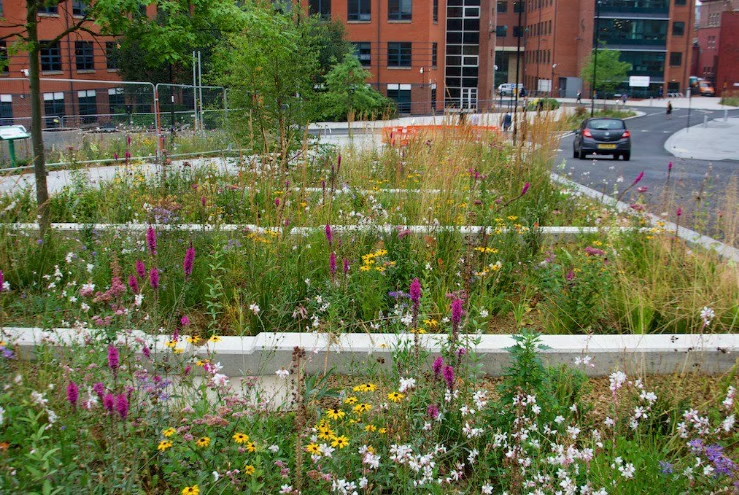
Picture this: a housing development where children play beside wildflower meadows that quietly manage storm water, where residents enjoy morning coffee overlooking ponds teeming with wildlife, and where every rainfall creates a symphony of natural water management. This isn’t a utopian dream but the reality of developments that successfully integrate Biodiversity Net Gain requirements with Sustainable Drainage Systems.
As environmental regulations reshape the development landscape, the smartest developers are discovering that biodiversity and drainage design aren’t competing priorities but powerful allies. The result? Projects that don’t just tick regulatory boxes but create genuinely desirable places to live and work.
Understanding the Regulatory Landscape
Since February 2024, major developments in England must demonstrate a 10% biodiversity net gain, whilst SuDS remain a cornerstone of sustainable water management. Rather than viewing these as separate compliance hurdles, forward-thinking developers are recognising the synergies between biodiversity enhancement and sustainable drainage design.
The National SuDS Standards emphasise the hierarchy of water management: collection for reuse, infiltration to ground, discharge to surface water bodies, surface water sewers, and finally combined sewers. This hierarchy naturally aligns with habitat creation opportunities, particularly when infiltration and surface water discharge options are explored.
The Natural Partnership
SuDS components inherently support biodiversity through their design and function. Swales, retention ponds, and constructed wetlands don’t merely manage surface water runoff; they create valuable habitats for flora and fauna. When designed with biodiversity in mind, these features can contribute significantly to BNG requirements whilst fulfilling their primary drainage function.
Consider a typical residential development where traditional piped drainage might have been the default solution. By incorporating bioretention areas, rain gardens, and permeable surfaces, developers can achieve multiple objectives: effective water management, biodiversity enhancement, and often reduced infrastructure costs.
Maximising Habitat Value Through Design
The key to successful integration lies in thoughtful design that considers both hydraulic performance and ecological function. Native plant species selection becomes crucial, choosing vegetation that thrives in wet-dry cycles whilst providing nectar sources, seed heads, and nesting opportunities for local wildlife.
Retention ponds designed with varying depths create diverse microhabitats. Shallow margins support emergent vegetation and provide breeding grounds for amphibians, whilst deeper areas offer refuge during dry periods. Incorporating deadwood, stone features, and varied topography further enhances habitat complexity.
Green roofs and walls, increasingly popular in urban developments, exemplify this dual-purpose approach. Extensive green roofs manage rainfall whilst supporting specialist plant communities, particularly when designed with local seed mixes and varying substrate depths.
Practical Implementation Strategies
Successful projects begin with early collaboration between drainage engineers, ecologists, and landscape architects. Site constraints such as ground conditions, topography, and existing habitats inform the optimal SuDS selection and configuration.
Soakaway systems, where ground conditions permit, can be enhanced with native wildflower meadows above, creating attractive amenity spaces that contribute to biodiversity targets. Similarly, swales can be designed as linear wildlife corridors, connecting existing habitats and supporting species movement across developments.
The management train approach (treating runoff through multiple SuDS components) naturally creates habitat diversity. Water quality improvement through each stage supports aquatic ecosystems, whilst different components provide varied habitat niches.
Long-term Management Considerations
The success of biodiversity-focused SuDS depends heavily on appropriate long-term management. Maintenance regimes must balance hydraulic function with ecological objectives. This might involve seasonal cutting patterns that protect nesting birds, or selective vegetation management that maintains both water quality treatment and habitat value.
Monitoring protocols should assess both drainage performance and biodiversity outcomes. Regular ecological surveys can demonstrate BNG delivery whilst identifying opportunities for adaptive management.
Economic Benefits
Beyond regulatory compliance, integrated BNG-SuDS approaches often deliver economic advantages. Reduced infrastructure costs through natural water management, enhanced property values through attractive green spaces, and potential revenue from biodiversity credits create compelling business cases.
The amenity value of well-designed SuDS features (particularly those supporting wildlife) enhances development appeal and marketability. Residents increasingly value access to nature, making biodiversity-rich developments more attractive to purchasers.
Overcoming Common Challenges
Integration challenges typically centre on space constraints, maintenance responsibilities, and performance guarantees. However, innovative design solutions can address these concerns. Multifunctional spaces that serve as amenity areas during dry weather and water management features during storms maximise land use efficiency.
Clear maintenance specifications and management plans, established during the design phase, ensure long-term success. Professional maintenance teams increasingly understand the dual requirements of SuDS-biodiversity features.
The Future Landscape
As climate change intensifies weather patterns and biodiversity loss accelerates, the integration of water management and habitat creation becomes increasingly vital. Future developments will likely see even stronger regulatory drivers for this integration, making early adoption a competitive advantage.
Emerging technologies, including real-time monitoring systems and adaptive management protocols, will enhance our ability to optimise both drainage performance and biodiversity outcomes.
Conclusion
The marriage of Biodiversity Net Gain requirements and SuDS design represents more than regulatory compliance; it’s an opportunity to create developments that actively contribute to environmental recovery. By viewing water management and biodiversity enhancement as complementary objectives, developers can create places that are not only sustainable but genuinely regenerative.
Success requires early planning, collaborative design, and long-term commitment to appropriate management. However, the benefits (regulatory compliance, reduced infrastructure costs, enhanced marketability, and genuine environmental contribution) make this integration an essential component of modern development practice.
For developers and their design teams, the question isn’t whether to integrate BNG and SuDS, but how to maximise the synergies between them. The developments that embrace this integration will lead the way in creating truly sustainable communities for the future.