
Combining Attenuation with Rainwater Harvesting: A Smart Approach to Flood Prevention and Water Reuse
If the past couple of weeks have shown anything, it is that the South of England can swing quickly from worrying about surface water and flooding to worrying about water shortages. In Kent and Sussex alone, a major incident was declared as tens of thousands of properties were left without a proper water supply for days. Reports pointed to freeze thaw conditions causing bursts and leaks, disruption to treatment during Storm Goretti, and inconsistent bulk supply from a neighbouring company.
That is a sharp reminder that water is not just a drainage problem or a utilities problem. It is a resilience problem, and it starts at design stage.
For developers, architects, and consultants, this creates a clear opportunity. We can design sites that reduce flood risk while also capturing and reusing water that would otherwise be sent straight into the drainage network.
The problem: too much water and not enough water
Traditional drainage thinking often treats rainfall as waste. The aim becomes getting it off site as quickly as possible.
But that approach can create two big issues.
First, it increases peak flows into sewers and watercourses, which raises flood risk downstream.
Second, it throws away a valuable resource, especially when parts of the country are experiencing shortages and pressure on supply.
A smarter approach is to slow water down and store it, then put it to work.
What attenuation does, and what it does not
Attenuation is about managing the rate at which surface water leaves a site. You store runoff temporarily and release it in a controlled way, typically to match greenfield runoff rates or a restricted discharge agreed with the approving authority.
Common attenuation solutions include:
- Underground tanks and oversized pipes
- Geocellular storage
- Basins and ponds
- Swales and permeable paving with sub base storage
Attenuation is excellent for flood prevention, but it is usually passive. Water goes in, water is held back, water is released.
That is where rainwater harvesting changes the game.
Rainwater harvesting: turning runoff into a resource
Rainwater harvesting captures roof runoff (and sometimes other clean surfaces) and stores it for non potable uses such as:
- Toilet flushing
- Irrigation and landscaping
- Vehicle washing
- Process water for certain commercial uses
Instead of sending rainfall into the attenuation system, you intercept a portion of it and reuse it on site.
This reduces demand on mains water at exactly the time when supply can be under strain.
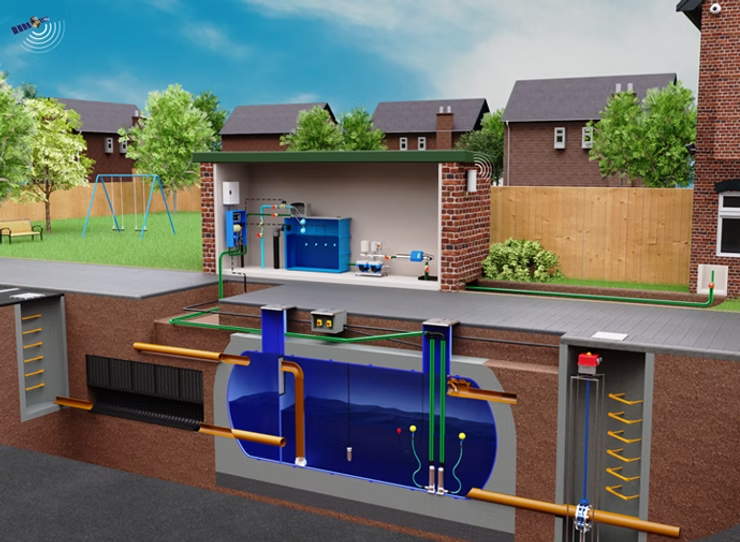
How rainwater harvesting could have helped during the South East outages
Rainwater harvesting would not have fixed a network outage, because most homes and businesses still rely on mains water for drinking, cooking, and bathing. But it could have reduced the impact in several practical ways during a multi day interruption.
First, it could have kept toilets working for longer. A typical rainwater harvesting setup feeds toilet flushing, which means households could still flush without using bottled water or saving precious mains water from emergency supplies.
Second, it could have helped protect vulnerable households and key buildings. If homes, care settings, schools, and community buildings had stored non potable water on site, they could maintain basic sanitation for longer. That reduces pressure on emergency distribution and helps councils and water companies prioritise drinking water.
Third, it could have reduced demand before and during the incident. Even before an outage, rainwater harvesting reduces daily mains demand. Across a neighbourhood, that can help keep storage tanks and distribution systems under less strain.
Fourth, it could have supported cleaning and other non drinking uses. Stored rainwater is useful for washing down and outdoor uses, which means less competition for treated water for tasks that do not need it.
Finally, it pairs well with attenuation for resilience. When you combine harvesting with attenuation, you are not just slowing runoff to reduce flood risk. You are also keeping a portion of rainfall as a usable reserve on site.
Important note: rainwater harvesting is non potable unless you add specialist treatment and controls. So it is mainly about sanitation and non drinking uses, not replacing bottled water.
Why combining the two works so well
When you combine attenuation with rainwater harvesting, you get a system that is both protective and productive.
Here is what that looks like in practice.
- Harvest first: Roof water is directed to a rainwater harvesting tank sized to meet realistic demand.
- Attenuate the overflow: When the harvesting tank is full, overflow is routed into the attenuation system.
- Control the discharge: The attenuation system releases water at an agreed restricted rate.
The benefits stack up quickly.
- Lower peak flows: Less water hits the attenuation system during typical rainfall because some is captured for reuse.
- Smaller storage volumes: In some cases, harvesting can reduce the required attenuation volume, depending on demand profiles and design assumptions.
- Better resilience: When supply is disrupted, having non potable water available on site can keep buildings functioning more smoothly.
- Stronger sustainability story: This is easier to justify in planning, especially where SuDS and water efficiency are under scrutiny.
Key design considerations (and common mistakes)
Combining systems is not complicated, but it does require joined up thinking.
- Demand matters: A harvesting tank only helps if there is regular non potable demand. Residential toilet flushing can be a strong baseline. Commercial demand can be even better if it is consistent.
- Water quality and separation: Keep clean roof water separate from trafficked areas where possible. Make sure filtration, calming inlets, and maintenance access are properly considered.
- Overflow routing: The overflow path must be clear, robust, and designed for exceedance. Do not assume the tank will always have capacity.
- Maintenance planning: Filters, pumps, and controls need a realistic maintenance regime. If it is not maintained, performance drops.
- Approvals and evidence: You still need to demonstrate compliance with discharge limits, storage volumes, and exceedance routing. Harvesting supports the case, but it does not replace the drainage strategy.
The bigger picture: planning for extremes
The recent outages in Kent and Sussex are not happening in isolation. They sit alongside more intense rainfall events, tighter planning conditions, and increasing expectations around SuDS and climate resilience.
Design teams that treat surface water as both a risk and a resource will be better placed to deliver schemes that get approved, perform well, and stand up to scrutiny.
Call to action
If you have a site coming up and you want a drainage strategy that reduces flood risk and cuts mains water demand, let us look at it with you.
Send over your site plan, proposed layout, and any planning conditions to martin.young@thedrainagedesigners.co.uk and we will advise on a practical approach to combining attenuation with rainwater harvesting, including what is likely to be acceptable to the approving authority.