Combining Multiple SuDS Features: A Systems Approach to Surface Water
We know that architects and housing developers are under pressure to deliver sites that work on paper and on the ground. Planning conditions are tighter, rainfall patterns are less predictable, and space is always at a premium.
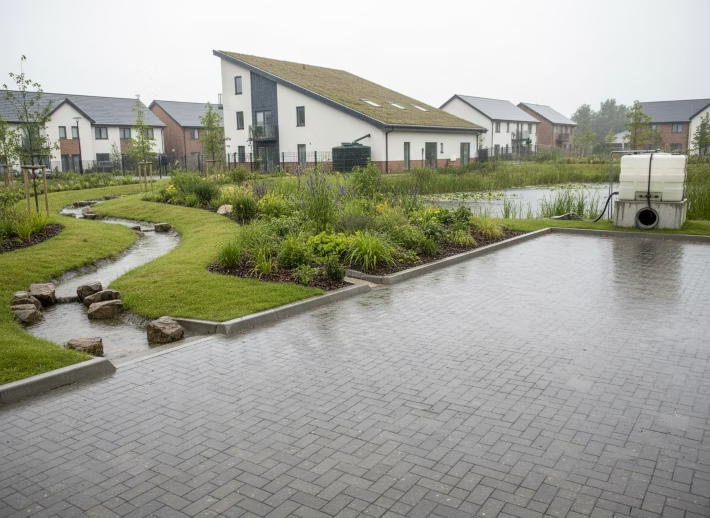
A systems approach to SuDS avoids that. Instead of relying on one feature to do everything, you combine several SuDS components so each one has a clear role. Done well, this makes the strategy easier to justify to planners, easier to coordinate with levels and landscaping, and more resilient when real weather arrives.
What a systems approach means
A SuDS system is not a single product. It is a route the rain takes through the site, from where it lands to where it is safely released. A joined-up SuDS train typically does four things:
- Controls runoff at source so less water becomes fast runoff
- Conveys water safely without creating nuisance flooding
- Treats water quality through staged filtration and settlement
- Stores and controls discharge to meet greenfield or restricted outfall rates
The practical difference is this – you design SuDS as one coordinated system with linked levels, defined inlets and outlets, and clear exceedance routes, rather than a set of disconnected features.
Why combining features beats relying on one
Most SuDS features are strong in one or two areas, but rarely all of them. A systems approach lets you spread the workload.
- Permeable paving is excellent for source control and can provide treatment, but it depends on build-up, maintenance, and ground conditions.
- Swales and filter strips are great for slowing flows and improving water quality, but they need space and careful setting out.
- Detention basins can provide reliable storage and flow control, but they may need upstream treatment and well-planned exceedance routing.
- Underground storage can solve space constraints, but it can be harder to inspect and maintain, and it is often best used as part of a wider strategy rather than the only answer.
When you combine features, you reduce risk. If one part performs less well than expected, the rest of the system still provides resilience. You also gain design flexibility. For example, a small reduction in peak runoff at source can reduce the size of downstream storage, which can protect layout and viability.
Start with the discharge hierarchy and site constraints
Before choosing features, it helps to confirm two fundamentals early.
1) Where can the site discharge to
Your outfall options shape everything. In broad terms, you are usually working through a destination hierarchy such as:
- Rainwater harvesting and reuse, wherever there is a realistic demand
- Infiltration to ground, where feasible
- Discharge to a watercourse
- Discharge to a surface water sewer
- Discharge to a combined sewer, where permitted
If infiltration is being considered, ground investigation and realistic infiltration assumptions are essential. Overconfidence here is one of the quickest ways to end up redesigning late.
2) What are the site constraints
Common constraints that affect SuDS selection include:
- Ground conditions and groundwater levels
- Contamination risk
- Steep levels or tight falls
- High traffic loading areas
- Adoption and ownership requirements
- Maintenance access
- Available landscape space
A systems approach does not ignore constraints. It uses a mix of features so you can still achieve flow control and water quality even when one option is limited.
Building a combined SuDS train that works
A simple way to design combined SuDS is to work from the top of the catchment down, adding features in layers.
1) Source control: reduce runoff early
Source control is often the most cost-effective way to reduce peak flows, because it can shrink everything downstream.
Common source control measures include:
- Rainwater harvesting and reuse where there is a clear demand, such as irrigation, toilet flushing, or site washdown
- Green roofs on suitable flat roof areas to reduce and delay runoff
- Permeable paving on car parks, private drives, and low-speed access roads to store water within the pavement build-up
- Soakaways or infiltration trenches where infiltration is proven and setbacks allow
For housing sites, even partial use of permeable paving and targeted infiltration can make the final storage requirement more manageable.
2) Conveyance and pre-treatment: slow and clean as you move
Once water leaves the source, the aim is to move it in a controlled way while improving water quality.
- Swales can convey runoff while slowing it and allowing settlement and some infiltration
- Filter strips can provide simple pre-treatment before water enters a basin, pond, or underground storage
- Bioretention areas and rain gardens can treat runoff and add landscape value
- Tree pits and structural soil systems can provide interception and treatment in streetscapes
For architects, this stage is where SuDS can become a visible part of the place-making. For developers, it is where you can often demonstrate a clear, defendable approach to water quality and exceedance routing.
3) Storage and flow control: meet the outfall requirement
Most sites still need a final storage element, especially where infiltration is limited or outfall rates are restricted.
- Detention basins provide storage above ground and are often easier to inspect and maintain
- Ponds and wetlands can provide both storage and treatment, but they require careful safety design and maintenance planning
- Geo-cellular or tank storage can be useful where space is tight, but access, silt management, and inspection need to be designed in from day one
- Flow controls such as vortex devices can regulate discharge, but they rely on good upstream treatment and a realistic maintenance plan
The goal is a clear, coordinated discharge strategy that meets planning requirements and is practical to build.
Design for exceedance, not just the design event
A SuDS strategy should not only work for the design storms. It should also behave predictably when rainfall exceeds capacity.
That means planning safe exceedance routes so water goes where you want it to go, not through door thresholds, into basements, or across private gardens. Often, the best exceedance solution is a combination of:
- Finished floor levels set above external levels
- Road and landscape falls that guide flow
- Kerb lines and low points that direct water
- Sacrificial areas that can temporarily store water
- Defined overflows between SuDS components
When multiple SuDS features are used, exceedance routing is often easier to manage because flows are already slowed and spread out.
Coordination tips that save time and redesign
Combined SuDS works best when it is coordinated early with the wider design team.
- Levels and gradients: confirm that the SuDS route has realistic falls and that inlets and outlets are properly set.
- Landscape intent: agree which features are functional SuDS and which are purely aesthetic, then design accordingly.
- Highways and tracking: ensure swales, tree pits, and permeable areas work with vehicle movements and construction tolerances.
- Utilities and easements: protect SuDS volumes and avoid clashes that force late changes.
- Phasing and temporary drainage: on multi-phase sites, plan how surface water is managed during construction.
For many schemes, the biggest win is simply having a clear, joined-up drainage narrative that matches the drawings, calculations, and levels.
Maintenance is part of the design
A combined SuDS system only performs long-term if maintenance is realistic. This is also an area planners and adopting bodies can focus on.
A practical maintenance plan should cover:
- Who owns each feature, and who is responsible for maintenance
- Safe access for inspection and cleaning
- Routine tasks, such as sweeping permeable paving, cutting vegetation, and removing silt from inlets
- Inspection frequency and what to look for
- How blockages and exceedance events will be managed
If maintenance is designed in, you protect performance and reduce future disputes about responsibility.
Common pitfalls when mixing SuDS features
A systems approach is robust, but there are a few recurring issues that can undermine it.
- Disconnected features: SuDS shown on drawings but not linked by levels, overflows, and flow paths
- Unproven infiltration: infiltration assumed without adequate investigation or with unrealistic rates
- Water quality overlooked: storage provided, but treatment stages are not clear
- Maintenance ignored: features selected without considering access, silt management, and ownership
- Space not protected: SuDS areas value-engineered late, leaving the strategy non-compliant
Most of these problems are avoidable when the SuDS train is designed as one coordinated route from the start.
Bringing it all together
Combining multiple SuDS features is not about making drainage more complicated. It is about making it more reliable. A systems approach designs a clear surface water journey through the site, using source control, conveyance, treatment, storage, and controlled discharge as a joined-up whole.
If you are developing a scheme and want a second pair of eyes on the SuDS strategy, or you need drainage drawings and calculations that stand up to planning review, we can help. The earlier SuDS is considered, the more options you have, and the easier it is to protect layout, programme, and approvals.