Integrating Green Roofs Into Your Surface Water Strategy
Green roofs, sometimes called living roofs, are more than a nice architectural feature. Done properly, they can become a practical part of your surface water strategy. They help slow down runoff, reduce pressure on drains, and support planning approval where SuDS is expected.
This article explains what green roofs do, where they fit in a drainage design, and what you need to think about before you commit.
What is a green roof?
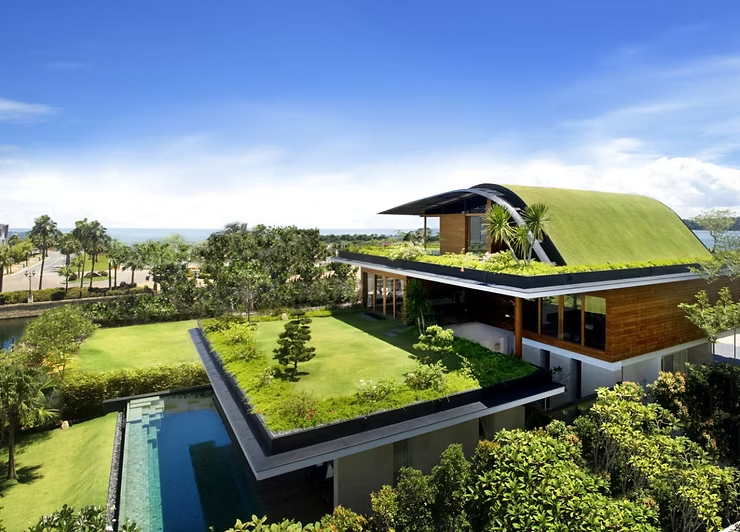
A green roof is a roof surface that includes a growing medium and vegetation, built up in layers above the waterproofing. Most systems include:
- A waterproof membrane, and often a root barrier
- A drainage layer
- A filter layer
- A growing medium, also called substrate
- Vegetation such as sedum, wildflower mixes, or more intensive planting
Green roofs are usually described as:
- Extensive: lighter, lower maintenance, typically sedum or hardy planting
- Intensive: deeper substrate, heavier, can support shrubs and amenity spaces
From a surface water point of view, both can help. What changes is how much water they can store, how heavy they are, and how much maintenance they need.
Why green roofs matter for surface water management
A conventional roof is basically a hard surface. Rain hits it, runs off quickly, and heads straight for gutters, pipes, and eventually a sewer, soakaway, or watercourse.
A green roof changes that behaviour by:
- Holding water in the substrate for temporary storage
- Slowing down runoff for attenuation
- Returning some water to the atmosphere through evapotranspiration
In practical terms, that means your peak flow rate can drop, and the total volume leaving the site during a storm can reduce, especially in smaller and moderate rainfall events.
Where green roofs fit in a SuDS treatment train approach
Green roofs are often best used as an upstream SuDS feature. They reduce runoff at the source, which can make everything downstream easier to size and justify.
For example, a green roof can work alongside:
- Rainwater harvesting for toilets or irrigation
- Permeable paving
- Planters and rain gardens
- Swales and basins
- Underground attenuation as a last resort
Even if you still need tanks or a soakaway, a green roof may allow you to reduce the storage volume required, simplify flow control, or improve overall resilience.
Key benefits beyond drainage
Green roofs are often chosen for surface water reasons, but they can also support wider project goals:
- Planning and compliance: helps demonstrate SuDS intent and sustainable design
- Biodiversity: habitat creation, especially with wildflower mixes
- Urban cooling: reduces heat build-up in built-up areas
- Amenity: intensive roofs can become usable outdoor space
- Roof protection: can protect waterproofing from UV and temperature swings when designed correctly
What you need to check before you include a green roof
Green roofs can be a great fit, but they are not a tick box solution. A few early checks will save time later.
1. Structural capacity
Green roofs add weight, especially when saturated. Your structural engineer needs to confirm the roof build-up is suitable, including:
- Dead load, meaning system weight
- Water retention and saturated weight
- Wind uplift considerations
2. Waterproofing and detailing
The waterproofing layer is critical. Poor detailing around penetrations, upstands, and edges is where problems start.
Make sure the roof system is:
- Designed as a complete build-up, not piecemeal
- Installed by competent contractors
- Maintained over time
3. Drainage outlets and overflow routes
Even a well-designed green roof will overflow in heavy rainfall.
You still need:
- Primary outlets sized correctly
- Secondary or overflow routes where required
- Clear exceedance pathways so water goes somewhere safe
A surface water strategy should show what happens in extreme events, not just the design storm.
4. Maintenance responsibilities
Extensive roofs are often marketed as low maintenance, but they are not no maintenance.
Typical requirements include:
- Checking outlets and leaf guards
- Removing unwanted growth
- Re-seeding bare patches
- Inspecting membranes and edge details
For commercial sites or multi-occupancy buildings, it is worth confirming who is responsible for ongoing maintenance and how it will be funded.
5. Performance assumptions in calculations
If you are using a green roof to justify reduced runoff rates or volumes, the design needs realistic assumptions.
Depending on your project, your drainage designer may need to consider:
- Roof area and pitch
- Substrate depth and storage capacity
- Seasonal performance differences
- Local authority expectations for evidence
Some approving bodies will want a clear explanation of how the green roof performance has been accounted for, rather than a vague statement that it reduces runoff.
Common mistakes to avoid
A few issues come up repeatedly on projects:
- Treating the green roof as a replacement for all other attenuation
- Forgetting overflow routes and exceedance planning
- Not confirming structural capacity early
- Assuming maintenance-free and leaving responsibilities unclear
- Installing a system that looks good but does not match the drainage intent
A green roof should be part of a joined-up strategy, not an isolated feature.
When a green roof is, and is not, the right choice
A green roof is often a strong option when:
- You have limited space at ground level for SuDS features
- You are working on an urban site
- Planning conditions require sustainable drainage
- You want visible sustainability features for stakeholders
It may be less suitable when:
- The structure cannot support the load
- Access for maintenance is impractical
- The roof is heavily shaded or has complex penetrations
- The project needs a very specific, guaranteed storage volume, in which case you may still need tanks
Final thoughts
Integrating green roofs into your surface water strategy is about more than adding planting to a roof. It is about managing rainfall at the source, reducing peak flows, and building a more resilient drainage design.
If you are considering a green roof, the best time to involve your drainage designer and structural engineer is early, before the roof build-up is fixed and before planning submissions go in. That is when you can get the biggest benefit, avoid redesign, and make sure the roof supports both performance and compliance.