The Hidden Benefits of Greywater Recycling: What Housing Developers Need to Know
As a housing developer, you’re constantly balancing construction costs, planning requirements, and market appeal. Greywater recycling systems might seem like an additional expense, but they offer strategic advantages that can significantly impact your project’s viability, profitability, and marketability. Beyond the obvious water conservation benefits, greywater systems can reduce infrastructure costs, strengthen planning applications, and create a competitive advantage in an increasingly sustainability-conscious market.
Understanding Greywater in Development Context
Greywater is relatively clean wastewater from showers, baths, washing machines, and bathroom sinks, excluding toilet waste (blackwater) and typically kitchen sink water. For housing developments, greywater systems collect this water, treat it to appropriate standards, and reuse it for toilet flushing, irrigation, and other non-potable applications across your development.
The key question for developers isn’t whether greywater recycling saves water, it’s whether it makes commercial sense for your project. The answer increasingly is yes, and here’s why.
Reducing Drainage Infrastructure Costs
One of the most compelling financial benefits of greywater recycling for developers is the potential reduction in drainage infrastructure requirements. When properties reuse greywater on-site, you’re substantially reducing the volume of wastewater that needs to be conveyed to the sewerage system.
For a housing estate, implementing greywater systems across multiple properties can reduce foul water drainage capacity requirements. This translates directly into smaller diameter pipes, reduced excavation, fewer manholes, and potentially smaller pumping stations if your site requires them.
On larger developments, these savings can be substantial. Reducing pipe diameters affects not just material costs but excavation, bedding, and labour. When multiplied across an entire estate’s drainage network, the savings can offset a portion of the greywater system installation costs.
Additionally, it’s worth discussing infrastructure charges with your local water company during the early planning stages, as reduced wastewater volumes may affect the charges applied to your development.
Strengthening Planning Applications
Planning authorities increasingly favour developments that demonstrate genuine commitment to sustainability and reduced environmental impact. Greywater recycling systems provide tangible evidence of this commitment and can strengthen your planning application in several ways.
Firstly, greywater systems help you meet water efficiency requirements in building regulations. Many local authorities impose water efficiency standards through planning conditions, and greywater recycling makes achieving these targets easier.
Secondly, including greywater systems demonstrates that you’ve taken a comprehensive approach to water management, addressing both supply and wastewater. This can reduce objections from statutory consultees, particularly in water-stressed areas where the Environment Agency and water companies are concerned about additional demand on resources.
Thirdly, for developments requiring environmental impact assessments, greywater systems strengthen your sustainability credentials and show you’re going beyond minimum requirements. This can be particularly valuable for larger or more sensitive sites where planning approval might otherwise be challenging.
Meeting SuDS and Water Management Requirements
Most housing developments now require sustainable drainage systems (SuDS) as part of planning permission. Greywater recycling complements your SuDS strategy by reducing both the volume of water entering the site from mains supply and the volume of wastewater leaving it.
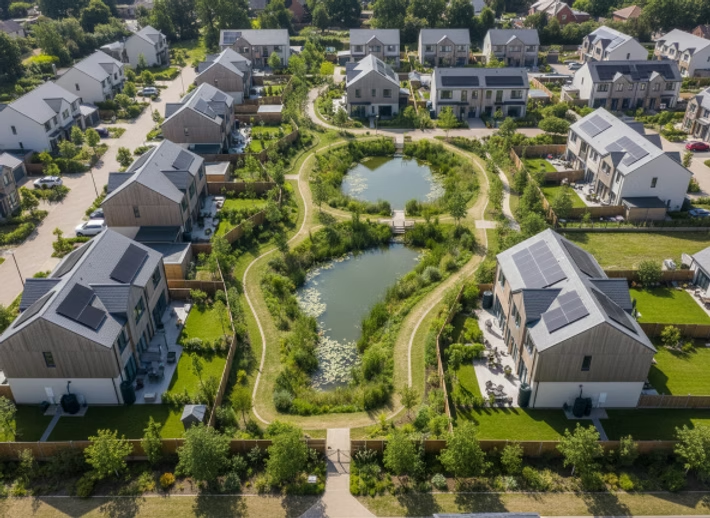
This integrated approach to water management is exactly what planning authorities and lead local flood authorities want to see. By combining greywater recycling with SuDS features like permeable paving, swales, and attenuation ponds, you’re creating a comprehensive water management strategy that minimises your development’s impact on local water resources and drainage infrastructure.
Some developers are finding that greywater systems can help resolve difficult drainage scenarios. If your site has limited capacity for surface water discharge or challenging ground conditions for infiltration, reducing foul water volumes through greywater recycling can free up capacity and make your overall drainage strategy more viable.
Creating Market Differentiation and Sales Appeal
Today’s homebuyers are increasingly environmentally conscious, and this is reflected in their purchasing decisions. Properties with greywater systems appeal to buyers who want to reduce their environmental impact and future-proof against rising water costs and potential restrictions.
For developers, this creates an opportunity for market differentiation. Marketing your development as incorporating advanced water recycling technology positions your properties as forward-thinking and sustainable. This can justify premium pricing and accelerate sales, particularly in areas with water stress concerns or among environmentally conscious buyer demographics.
The financial benefits for homeowners are also a strong selling point. With water bills rising consistently, greywater systems can provide measurable reductions in household water consumption. Over the lifetime of property ownership, these savings represent genuine added value that you can communicate to potential buyers.
Additionally, properties with greywater systems are better positioned for future regulatory changes. As building standards continue to tighten and water efficiency requirements increase, homes with greywater systems already installed will maintain their value better than those requiring costly retrofits.
Achieving Sustainability Certifications
If you’re targeting sustainability certifications such as BREEAM (Building Research Establishment Environmental Assessment Method) or aiming for higher ratings in schemes like the Home Quality Mark, greywater systems can contribute valuable credits towards water efficiency requirements.
These certifications are increasingly important for certain buyer segments, particularly housing associations, institutional investors, and corporate buyers. They also strengthen your company’s reputation and can open doors to future projects where sustainability credentials are essential.
For developers working on commercial elements within mixed-use schemes, BREEAM ratings can significantly impact letting values and investment appeal. Greywater systems are one way to gain water efficiency credits that contribute to overall certification levels.
Navigating the Regulatory Landscape
Implementing greywater systems requires careful attention to building regulations, water company requirements, and health and safety considerations. Working with experienced drainage designers who understand these requirements is essential to avoid costly mistakes or delays.
Your greywater system must comply with relevant building regulations and British Standards for greywater systems. The system design must prevent any possibility of cross-contamination between greywater and potable water supplies, which is a critical safety requirement.
Water companies have specific requirements for greywater systems, particularly regarding backflow prevention and notification procedures. Some require formal approval before installation, and failing to follow correct procedures can result in enforcement action and costly remediation.
Your drainage designer should also consider the ongoing maintenance requirements of greywater systems and ensure these are clearly communicated to homeowners. Systems should be designed for ease of maintenance, with accessible filters and clear servicing instructions provided at handover.
Considering Whole-Life Costs and Value
When evaluating greywater systems for your development, it’s important to consider whole-life costs rather than just initial installation expenses. Whilst greywater systems do add upfront costs, the combination of reduced drainage infrastructure, potential planning advantages, and enhanced market appeal can provide positive returns.
For a housing estate, the business case includes several factors:
Costs: Greywater system installation across properties, additional design and specification time, ongoing warranty and maintenance considerations.
Savings and benefits: Reduced foul drainage infrastructure requirements, potential adjustments to water company charges, strengthened planning application reducing risk of refusal or delays, market differentiation and potential for premium positioning, sales appeal due to sustainability features and lower running costs.
Many developers are finding that when these factors are properly accounted for, greywater systems represent sound commercial decisions, particularly on larger developments where infrastructure savings are most significant.
Practical Implementation Considerations
Successfully implementing greywater systems across a housing development requires early planning and integration with your overall design strategy. Here are key considerations:
System selection: Choose between individual property systems or centralised systems serving multiple properties. Individual systems offer redundancy and simpler management but may have higher per-unit costs. Centralised systems can offer economies of scale but require careful design and management arrangements.
Space requirements: Greywater systems require space for treatment tanks and associated equipment. This needs to be factored into your property designs early, typically requiring a dedicated cupboard or external housing.
Integration with other services: Coordinate greywater system design with your drainage designer, architect, and mechanical and electrical consultants to ensure proper integration and avoid clashes with other building services.
Maintenance arrangements: Establish clear procedures for ongoing maintenance, either through management companies for apartments or clear handover information for individual homeowners. Consider how maintenance responsibilities will be communicated and managed.
Warranty and support: Ensure your greywater system supplier provides adequate warranty coverage and ongoing support, as this will affect your NHBC or warranty provider requirements.
Working with Drainage Design Specialists
The success of greywater implementation depends heavily on proper design and integration with your overall drainage strategy. Experienced drainage designers can help you evaluate whether greywater recycling makes commercial sense for your specific project and ensure the system is properly sized, compliant with regulations, and integrated with your foul and surface water drainage.
Early engagement is crucial. Discussing greywater options during the initial drainage design phase allows your designer to optimise the entire water management strategy for your site, potentially identifying savings and benefits that wouldn’t be apparent if greywater is considered as an afterthought.
Your drainage designer should be able to provide clear cost-benefit analysis specific to your site, taking into account local ground conditions, water company requirements, planning authority expectations, and your target market.
Conclusion
For housing developers, greywater recycling offers benefits that extend well beyond environmental credentials. From reducing drainage infrastructure costs and strengthening planning applications to creating market differentiation and future-proofing your properties, the strategic advantages are worth serious consideration.
As water efficiency requirements continue to evolve and buyers become more sustainability-conscious, greywater systems are transitioning from optional extras to features that can provide genuine competitive advantage. Developers who evaluate this technology carefully and implement it where commercially appropriate will be better positioned for future projects and market demands.
If you’re planning a new housing development, it’s worth having an early conversation with drainage design specialists who can evaluate whether greywater recycling makes sense for your specific project. The answer will depend on your site characteristics, target market, and local planning context, but the potential benefits make it a conversation worth having.