
Understanding Permeable Pavement Compliance for Surface Water Drainage
Permeable pavements are increasingly used in sustainable drainage systems (SuDS) to manage rainwater, reduce surface runoff, and meet planning and environmental regulations. Knowing when a permeable pavement design is compliant is essential for successful project delivery. Here is a detailed explanation of the main compliance rules, including practical scenarios and design tips.
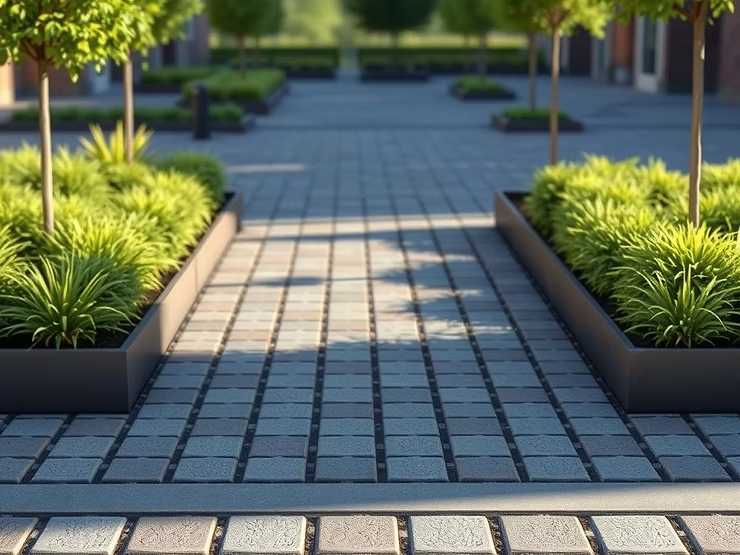
Permeable Surfaces Without Additional Drainage
When a permeable pavement only receives rainfall that lands directly on its surface, it is automatically considered compliant with drainage standards. This is true whether or not the pavement has a liner beneath it. A liner is a membrane that stops water from soaking into the ground. In this scenario, there is no extra water from nearby roofs, driveways, or other surfaces draining onto the permeable area. This approach is straightforward and often used for small patios, footpaths, or driveways where only the rain that falls on the surface needs to be managed.
Unlined Permeable Surfaces Draining Adjacent Impermeable Areas
If the permeable pavement does not have a liner (meaning water can soak through into the soil below), it can also accept runoff from nearby impermeable surfaces, such as roofs or traditional tarmac. Compliance is achieved as long as the area of impermeable surface draining onto the permeable pavement is no greater than the area of the permeable surface itself. For example, a 40 square metre permeable driveway can receive up to 40 square metres of roof runoff. This rule applies regardless of the soil type beneath the pavement, making it a flexible solution for most sites.
High Infiltration Soils Allowing Greater Runoff
Some soils, such as sand or gravel, allow water to soak away very quickly. Where the ground beneath the permeable surface is highly permeable (with an infiltration rate greater than 1×10⁻⁶ metres per second), and the system is unlined, the pavement can handle much more runoff. In these cases, the permeable area can receive runoff from up to five times its own area from adjacent impermeable surfaces. For instance, if you have a 25 square metre permeable area built on sandy soil, you can drain up to 125 square metres of roof or driveway onto it. This is particularly useful for larger developments or where space for permeable surfaces is limited.
Lined Permeable Surfaces with Extra Drainage
If the permeable pavement has a liner (which prevents any water from soaking into the ground) and also receives runoff from adjacent impermeable surfaces, it does not automatically comply with drainage standards. Since the water cannot infiltrate, it has to be managed elsewhere. In these cases, additional downstream features are required, such as soakaways, attenuation tanks, or other SuDS components. These features temporarily store the water and release it slowly to prevent flooding or overloading the drainage system.
Design Tips and Practical Considerations
- Site Assessment: Always check the soil infiltration rate before deciding on a design. Simple percolation tests can help determine if the ground is suitable for infiltration.
- Surface Area Calculations: Carefully measure both the permeable and impermeable areas to ensure you do not exceed the allowed ratios.
- Liners: Use liners only when necessary, such as where there is a risk of groundwater contamination or where infiltration is not possible.
- Maintenance: Regularly clean permeable surfaces to prevent clogging, which can reduce their effectiveness.
- Downstream Features: For lined systems or where infiltration is limited, plan for additional drainage elements early in the design process.
Understanding these rules helps ensure your drainage designs are both effective and compliant. If your project has unique requirements or you need help with calculations, consider seeking advice from a drainage design specialist.