How to Identify Drainage Problems in Older Properties
Table of Contents
- Why Older Properties Are Prone to Drainage Issues
- Common Warning Signs of Drainage Failure
- Visible Indicators: What to Look For Outside
- Understanding Pipe Corrosion and Material-Specific Vulnerabilities
- Signs of Collapsed Drain and Structural Damage
- Do I Need Professional Drainage Design and a CCTV Survey?
- Drainage Survey Cost and What to Expect
- Seasonal Drainage Risks and Preventative Maintenance
- Frequently Asked Questions
Why Older Properties Are Prone to Drainage Issues
Older properties face unique drainage challenges that newer builds rarely encounter. Systems installed decades ago were designed to different standards, used materials that deteriorate predictably, and have been subjected to ground movement, tree root pressure, and structural settling.
Most properties built before the 1970s used clay pipes as the primary drainage material (historicengland.org.uk). Clay is porous, brittle, and breaks down over time when exposed to acidic soils, tree roots, and ground movement. Cast iron pipes, common in Victorian and Edwardian properties, corrode from the inside out. Pitch fibre pipes, introduced in the 1960s, soften and collapse under ground pressure.
Ground movement compounds the problem. Older properties often settle unevenly as soil compacts, tree roots expand, or moisture content changes seasonally. This misaligns pipes, creates stress points, and eventually causes fractures. A property standing for 80 years has experienced countless freeze-thaw cycles, each working against the integrity of the drainage system beneath.
The Drainage Designers (Woodvale consulting Ltd) has assessed many older properties, and the pattern is consistent: systems that worked adequately for 50 years often fail rapidly once they reach a critical threshold. Failure is rarely sudden but preceded by warning signs most homeowners miss until the problem becomes severe.
Common Warning Signs of Drainage Failure
Drainage problems announce themselves through multiple channels before becoming visible outside. Learning to recognise these signs early can save thousands in repair costs and prevent damage to your property’s foundations.
Gurgling and bubbling sounds from fixtures
Gurgling sounds from your toilet, sink, or shower drain indicate trapped air in the drainage system. This happens when a blockage or partial collapse forces air back up through the pipes instead of allowing water to flow freely downward. The sound is often worse when you flush the toilet or run water in an upstairs bathroom, as the sudden volume of water creates pressure that forces air back up through lower fixtures.
Bubbling in the bath or shower whilst the toilet flushes signals that air is being forced backward through the system rather than escaping naturally through the roof vent. In older properties, this frequently indicates a partial blockage from grease, silt, or debris accumulation, or a collapsed section of pipe where water flow is restricted.
Unpleasant odours and sewer smells
Sewer smells inside or around your property indicate a break in the drainage system seal. Properly functioning pipes contain odours and direct them safely to the public sewer or treatment system. When pipes crack, separate, or collapse, gases escape into the surrounding soil and into your property.
The smell is typically strongest near the property, in the garden, or in lower rooms like basements or ground floor bathrooms. In older properties, it often becomes noticeable in spring or after heavy rain, when the water table rises and forces gases upward through the soil.
Slow drainage and recurring blockages
Slow drainage that worsens over weeks or months indicates progressive blockage. Water takes noticeably longer to disappear from the sink, bath, or shower. You may need to plunge more frequently, or blockages that you clear return within days.
In older properties, this pattern usually reflects grease and silt accumulation inside clay or cast iron pipes, partial collapse of a pipe section reducing the flow area, or tree roots penetrating the pipe and gradually filling it. Recurring blockages in the same location suggest a localised problem, whilst blockages occurring randomly throughout the property indicate a problem in the main drainage line.
Visible Indicators: What to Look For Outside
External signs of drainage failure are often more obvious than internal ones but frequently overlooked. A systematic walk around your property can reveal problems before they damage your foundations.
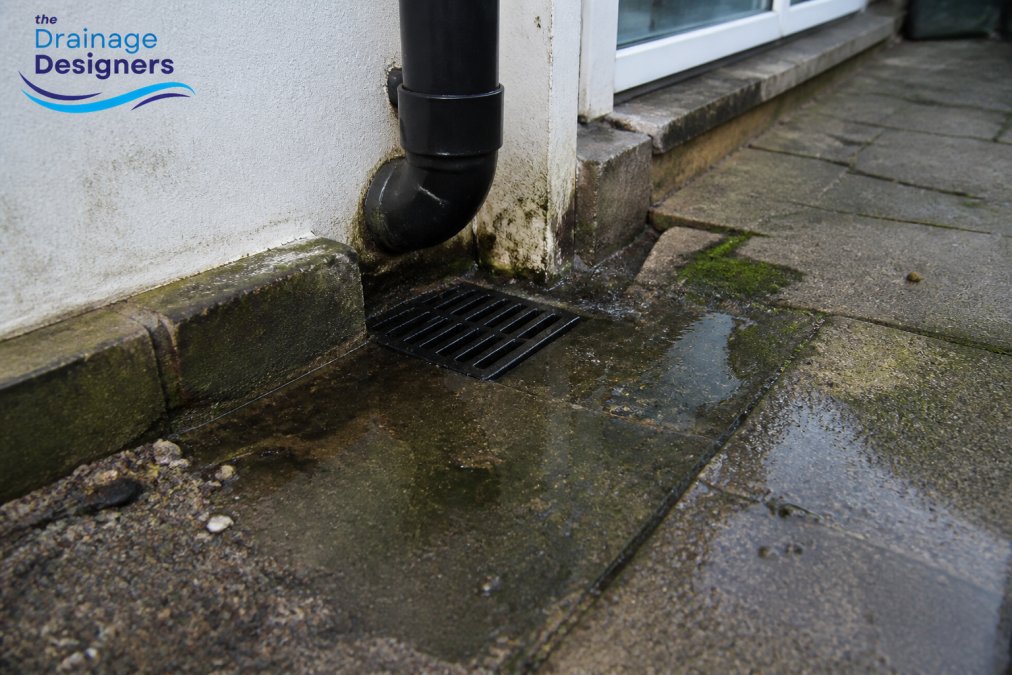
Standing water and damp patches
Standing water in the garden, particularly in the same location after rain, indicates poor drainage. If the water persists for more than a few hours after rain stops, the underlying drainage system is either blocked or non-functional. In older properties, this often means the drainage line has collapsed or become severely restricted.
Damp patches that appear seasonally, typically in spring or after heavy rain, suggest that water is accumulating around the foundations rather than being directed away. Look for areas where the grass is noticeably greener or lusher than surrounding areas, or where the ground is softer underfoot, indicating saturated soil.
Tree root ingress and ground movement
Tree roots are attracted to moisture and nutrients in drainage pipes. Over decades, roots can penetrate small cracks and gradually fill the pipe, eventually blocking it completely. In older properties with clay pipes, root ingress is extremely common because clay is porous and roots can penetrate it relatively easily.
Signs of root damage include cracked or displaced paving near large trees, subsidence or settlement of the ground surface, and visible roots on the soil surface near the property. If you have large trees, particularly willows, poplars, or oaks, within 10 metres of your drainage system, root ingress is a significant risk (rhs.org.uk).
Ground movement caused by tree roots, clay soil shrinkage, or structural settling can misalign drainage pipes. Even a slight shift of a few millimetres can create a step in the pipe where debris accumulates and blockages form.
Cracks in foundations and subsidence signs
Cracks in your property’s external walls or foundation, particularly diagonal cracks that run from corner to corner, can indicate subsidence caused by a failed drainage system. When drainage pipes fail and leak, water accumulates around the foundations, softening the soil and reducing its load-bearing capacity.
Look for cracks that follow the mortar lines between bricks (stepped cracks) or diagonal cracks that widen toward the top. These patterns indicate differential settlement. Windows and doors that stick or won’t close properly, or floors that slope noticeably, are also signs of subsidence. These symptoms combined with external drainage problems strongly suggest that the drainage system is failing and causing ground instability.
Understanding Pipe Corrosion and Material-Specific Vulnerabilities
The age and material of your drainage pipes determine how they fail and how quickly. Each material has predictable failure patterns.
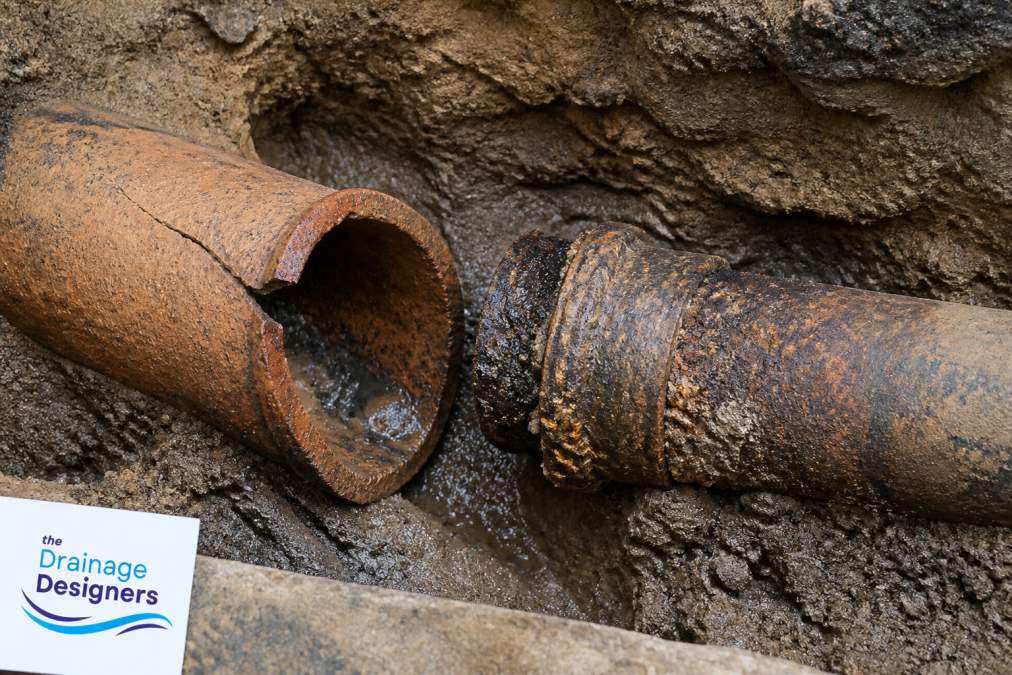
Clay pipes: age and root damage
Clay pipes, the standard for Victorian and early 20th-century properties, typically last 50-80 years before significant deterioration begins. They fail through a combination of root penetration, ground movement, and internal corrosion from acidic soils.
Clay is porous, which means water and roots can penetrate it. Tree roots are attracted to the moisture inside the pipe and will exploit any small crack or joint. Once inside, they grow and eventually block the pipe completely.
Ground movement is particularly damaging to clay pipes because they’re rigid and brittle. When the ground shifts, clay pipes crack rather than flex. The cracks allow water to escape into the surrounding soil and allow roots and soil to enter the pipe.
Cast iron and pitch fibre deterioration
Cast iron pipes, common in properties from the 1920s to 1970s, corrode from the inside out. Water carries dissolved minerals and gases that react with the iron, creating rust. The rust gradually thickens inside the pipe, reducing the flow area and creating a rough surface where debris accumulates.
Pitch fibre pipes, introduced in the 1960s as a cheaper alternative to cast iron, have a different failure mode. The pitch softens under heat and pressure, causing the pipe to collapse or deform. This typically happens 30-50 years after installation, particularly in areas with high ground temperature or high water table. Collapsed pitch fibre pipes are extremely difficult to repair because the material is fragile and prone to breaking further during excavation.
Both materials show age-related deterioration that accelerates once it begins. A 50-year-old cast iron pipe may still function adequately, but a 70-year-old one often requires replacement.
Signs of Collapsed Drain and Structural Damage
A fully collapsed drainage pipe is the most severe failure state and requires excavation, replacement, and often remedial work to stabilise the surrounding ground.
Complete collapse is rare without warning signs. It’s usually preceded by progressive problems, increasing blockages, spreading damp patches, or settling of the ground surface. Signs of imminent or actual collapse include sudden, severe subsidence of the ground surface, sudden loss of drainage capacity despite clearing blockages, or a large area of wet ground that doesn’t dry even in dry weather.
If you notice these signs, the drainage system requires professional assessment immediately. Continued use of the property without repair risks further damage to foundations and increasingly expensive remedial work.
Do I Need Professional Drainage Design and a CCTV Survey?
Determining whether you need professional help depends on the severity of the problem, the age of your property, and whether you’re planning renovation work that requires planning approval.
If you’re experiencing multiple warning signs, gurgling sounds, sewer smells, slow drainage, and visible damp patches, a professional assessment is essential. A drainage engineer can identify the exact location and nature of the problem, which determines the repair approach.
If you’re planning an extension, renovation, or any work that requires planning approval, you’ll need professional drainage design regardless of whether you have current problems. Local authorities require compliant drainage design as part of the planning approval process. The Drainage Designers (Woodvale consulting Ltd) works with homeowners and architects to ensure that new drainage designs meet Local Authority and Lead Local Flood Authority requirements, maximising the chances of first-time planning approval.
A CCTV survey (closed-circuit television inspection) is the most reliable way to diagnose drainage problems in older properties. A camera is inserted into the drainage system, showing the internal condition of the pipes, the location of blockages, collapses, or misalignments, and the overall structural integrity of the system. Without a CCTV survey, any diagnosis is guesswork. A plumber clearing a blockage is treating the symptom, not identifying the cause. If the underlying problem is a collapsed or corroded pipe, the blockage will return within weeks.
Drainage Survey Cost and What to Expect
Professional drainage surveys and design work vary in scope depending on the property size, the complexity of the system, and whether you’re diagnosing an existing problem or designing a new system for planning approval.
A basic CCTV survey of a residential drainage system typically covers the main drainage line from the property to the public sewer or treatment system. The surveyor will identify the location of any problems, assess the condition of the pipes, and provide a report with recommendations for repair or replacement.
For accurate pricing for your specific situation, contact The Drainage Designers (Woodvale consulting Ltd) for a quote. We provide transparent pricing and no hidden fees, with a clear breakdown of what’s included in the service.
Planning approval projects require more comprehensive documentation than simple diagnosis. You’ll need a site survey, flood risk assessment, and detailed drainage design drawings that meet Local Authority standards. The Drainage Designers (Woodvale consulting Ltd) has extensive experience with Local Authority requirements across the UK and ensures that designs are compliant first time, reducing the risk of rejection or conditions.
Seasonal Drainage Risks and Preventative Maintenance
Drainage problems often worsen in specific seasons. Winter and early spring are high-risk periods for drainage failure in older properties. Frozen ground reduces the permeability of soil, preventing water from draining away. Heavy winter rain combines with frozen ground to create waterlogging around properties.
Spring thaw brings additional problems. Melting snow and ice creates sudden, large volumes of water that overwhelm aging drainage systems. Combined with tree root growth that accelerates in spring, this is the season when blockages and collapses are most likely to occur.
Summer drought can also cause problems. Dry soil shrinks, particularly clay soils, creating ground movement that stresses drainage pipes. The combination of ground movement and tree root activity often causes cracks and misalignments that become apparent when autumn rain tests the system.
Preventative maintenance involves regular clearing of gutters and downpipes to prevent water from accumulating around the property, keeping trees trimmed back to reduce root pressure on drainage lines, and avoiding planting new trees close to drainage systems. For older properties, professional cleaning of the main drainage line every 5-10 years can prevent blockages from accumulating and extend the life of aging pipes (ciphe.org.uk).
If you’re planning significant work on an older property, involve a drainage professional early. The Drainage Designers (Woodvale consulting Ltd) provides comprehensive site assessment and drainage design that identifies existing problems and ensures that new systems are compliant and durable. Early professional input prevents costly problems during construction and ensures that your property meets current standards for drainage and flood risk.
Identifying drainage problems in older properties requires attention to both internal warning signs and external indicators. Gurgling sounds, sewer smells, slow drainage, damp patches, and ground movement are all messages from an aging drainage system. The material of your pipes determines how and when they’ll fail, but all share predictable deterioration patterns. Professional assessment through CCTV survey reveals the true condition of your system and guides repair decisions. If you’re planning renovation work requiring planning approval, professional drainage design is essential. The Drainage Designers (Woodvale consulting Ltd) provides expert site assessment, CCTV surveys, and compliant drainage design tailored to your property’s specific needs. Get in touch with our team to discuss your drainage concerns and secure a professional assessment that protects your property’s long-term stability.
Frequently Asked Questions
What are the most common signs of a collapsed drain in an older home?
The most telling signs of a collapsed drain include persistent foul odours from fixtures, multiple drains backing up simultaneously, and visible subsidence or cracks in your property’s foundation. You may also notice standing water in the garden or unusually lush patches of grass above the drainage line. If you suspect structural collapse, a CCTV drainage survey is essential to confirm the damage and determine whether repair or replacement is needed.
How do I know if I need professional drainage design rather than attempting DIY inspection?
Professional drainage design is necessary when you’re planning building work, extensions, or renovations that require planning approval. While you can identify warning signs yourself, a qualified drainage engineer can assess whether your existing system meets current Building Regulations, design compliant solutions, and secure Local Authority and Lead Local Flood Authority approvals. For older properties with suspected structural issues, professional assessment protects your investment and ensures compliance.
Why are clay pipes in older properties so prone to problems?
Clay pipes, common in properties built before the 1970s, deteriorate over decades due to ground movement, tree root ingress, and chemical corrosion from wastewater. Clay is porous and brittle, making it vulnerable to cracking and misalignment as soil shifts. Root systems actively seek moisture and can penetrate even small cracks, causing blockages and structural failure. Cast iron and pitch fibre pipes suffer similar age-related deterioration, though through different mechanisms.
What should I expect to pay for a drainage survey, and is it worth the cost?
A professional CCTV drainage survey identifies hidden problems before they become expensive emergencies. Costs vary depending on property size, drainage complexity, and access difficulty. Rather than paying for reactive repairs after a collapse, a survey provides clarity on your system’s condition and helps with insurance claims, property valuations, and planning approvals. Getting a professional assessment early often saves thousands in remedial work and prevents damage to your property’s structural integrity.
This article was written using GrandRanker