7 Best Drainage Consultants for Residential Planning
Table of Contents
- What Is a Drainage Consultant for Planning Applications?
- Why Hire a Drainage Consultant for Your Residential Project
- Quick Comparison of Top Drainage Consultants
- 1. The Drainage Designers: Nationwide Expertise and Transparent Service
- 2. Unda Consulting: Fixed-Fee Drainage Strategies with CIWEM Professionals
- 3. RIDA Reports: SuDS Compliance for Residential Developments
- 4. H2Ogeo: Specialist Flood Risk Assessment for Planning
- 5. Hydrogeo: Environmental Expertise Across Water and Contamination
Last Updated: August 13, 2026

What Is a Drainage Consultant for Planning Applications?
A drainage consultant for residential planning is a specialist who designs and certifies water management systems to meet local authority requirements for new builds and extensions. They prepare technical documentation that planning officers need to approve your project, covering surface water discharge, foul drainage, and flood risk mitigation.
When you submit a planning application, the local authority will ask: where does rainwater go? How does foul water leave the property? What happens if the area floods? A drainage consultant answers these questions with site-specific designs that satisfy Building Regulations and environmental standards. At The Drainage Designers (Woodvale consulting Ltd), we work with homeowners, architects, and developers to turn site surveys into compliant drainage strategies that planning committees approve.
The consultant’s role spans three core areas. First, they conduct a site investigation to understand soil conditions, water table depth, and existing infrastructure. Second, they design a drainage system appropriate to your site, whether that’s a soakaway, connection to mains sewer, or sustainable drainage system. Third, they produce the technical reports and drawings that planners and building control need to sign off your project.
Why Hire a Drainage Consultant for Your Residential Project
Planning committees reject drainage designs more often than any other technical element because poor drainage causes flooding, which damages property and infrastructure. Local authorities are now required to assess flood risk before granting permission, which means your application needs evidence that water will be managed safely.
Your architect can draw a beautiful extension, but if they haven’t accounted for surface water runoff or local flood zones, the planning officer will ask for revisions. That delays your timeline and costs money to redesign. A drainage consultant prevents this by embedding compliance into the initial design.
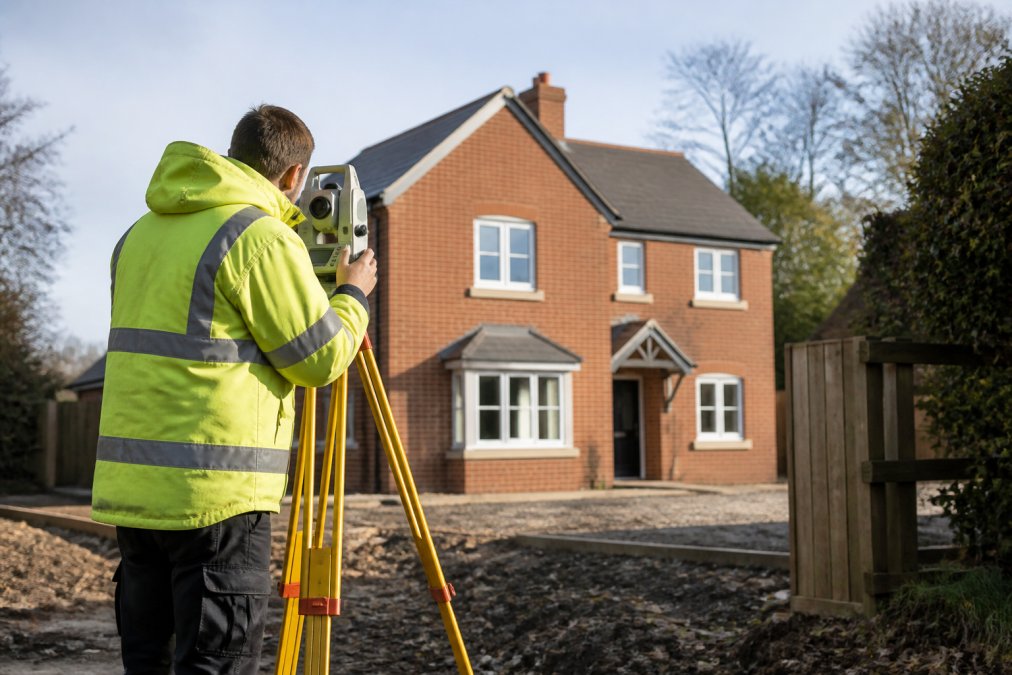
The second reason is technical complexity. Building Regulations, environmental standards, and local authority policies overlap. A consultant knows which rules apply to your specific site and understands that sustainable drainage systems (SuDS), permeable paving, rain gardens, and attenuation tanks are now preferred by most councils over traditional piped drainage.
A consultant saves time and money by getting approval right the first time. Resubmissions after rejection can add months to a project. Finally, if your site has any complexity, sloping ground, poor soil conditions, proximity to a watercourse, or location in a flood zone, a consultant is essential rather than optional.
Planning refusal on drainage grounds is the most common reason for resubmission. A single rejection can delay your project by 8-12 weeks and cost thousands in redesign fees. A consultant’s upfront investment prevents this entirely.
Quick Comparison of Top Drainage Consultants
| Consultant | Specialism | Key Strength | Best For |
|---|---|---|---|
| The Drainage Designers | Commercial and domestic drainage design | Nationwide service, transparent ethics | Homeowners and architects seeking straightforward advice |
| Unda Consulting | Surface water and foul drainage strategies | Fixed-fee quotes within 60 minutes | Developers needing quick, buildable solutions |
| RIDA Reports | SuDS design and compliance | Transparent pricing, advanced modelling | Projects prioritising cost-effectiveness and water company adoptability |
| H2Ogeo | Hydrogeology and flood risk | Specialist groundwater expertise | Sites with infiltration challenges or complex hydrogeology |
| Hydrogeo | Environmental water and contamination | 40+ years’ experience, broad scope | Complex sites needing multi-disciplinary environmental input |
1. The Drainage Designers: Nationwide Expertise and Transparent Service
The Drainage Designers combine nationwide coverage with transparent, ethical practice. Their service spans site visits, flood risk assessments, drainage strategy design, and support through to planning approval.
What sets them apart is their approach to complexity. They don’t hide behind jargon or surprise you with unexpected costs. They conduct a proper site investigation, understand local authority requirements, and deliver designs that planning officers approve. Their team has worked across commercial and domestic projects, which means they understand both the technical rigour required and the practical constraints of residential sites.
For homeowners, you’re getting specialists who’ve solved dozens of similar problems and know exactly what your local planning authority needs to see. Their nationwide reach is valuable if you’re in a region where drainage standards are stricter, coastal areas with tidal flood risk, upland areas with poor drainage, or clay-heavy soils.
The Drainage Designers’ customer charter explicitly commits to transparent pricing and ethical practice. If you’ve been burned by consultants who add unexpected fees, this approach is worth verifying early in your conversation.
2. Unda Consulting: Fixed-Fee Drainage Strategies with CIWEM Professionals
Unda Consulting has built their reputation on speed and clarity. They’ll provide a fixed-fee quote within 60 minutes of a working day, with no hidden surprises later. Their consultants are professionally qualified members of CIWEM, the Chartered Institution of Water and Environmental Management, which means they’re bound by professional standards and continuing education requirements.
Their specialism is surface water and foul drainage strategies. They focus on controlling runoff rates and volumes, identifying discharge destinations, and ensuring water quality compliance. What homeowners and architects appreciate is the fixed-fee model. You know the cost upfront with no scope creep.
They’ve completed over 5,000 flood risk and drainage assessments, which means they’ve seen most scenarios. If your site has a common constraint, they can draw on that experience to propose a practical, buildable solution quickly.
3. RIDA Reports: SuDS Compliance for Residential Developments
RIDA Reports specialise in sustainable drainage systems, which are now the default expectation for most residential planning applications. They design permeable paving, rain gardens, soakaways, and attenuation ponds, the systems that councils prefer because they manage water naturally rather than piping it away.
Their transparency on pricing is refreshing. They use advanced SuDS design software to model how water moves through your proposed system, which means their designs are detailed and defensible when planning officers ask questions. For homeowners and architects, SuDS compliance is now a planning condition in most applications. Councils want to see that you’re managing surface water on-site, reducing runoff to existing sewers, and ideally improving water quality.
Their focus on cost-effectiveness and water company adoptability is valuable. Some SuDS designs look good on paper but are expensive to maintain or difficult for water companies to adopt if the site is ever sold. RIDA designs for both compliance and practicality.
4. H2Ogeo: Specialist Flood Risk Assessment for Planning
H2Ogeo brings specialist hydrogeology expertise to flood risk and drainage. If your site has groundwater challenges, a high water table, poor infiltration, or proximity to a spring, they understand the science and can design around it.
Their service includes flood risk assessments, outline drainage strategies, and specialist advice on infiltration-led SuDS. What distinguishes them is their focus on infiltration. Many drainage consultants default to piping water away. H2Ogeo explores whether your site can absorb water naturally, which is often cheaper, more sustainable, and more likely to satisfy modern planning standards.
For sites with hydrogeological complexity, clay soils, high water table, or proximity to groundwater-dependent ecosystems, they’re worth consulting.
5. Hydrogeo: Environmental Expertise Across Water and Contamination
Hydrogeo is a broad environmental consultancy with over 40 years’ experience. They offer flood risk assessments, SuDS design, groundwater protection, and contaminated land advice, which means if your site has multiple environmental concerns, they can address them all in one engagement.
Their team comprises hydrogeologists, chartered geologists, and geoenvironmental specialists. This breadth is useful if your site is complex, for example, a former industrial site that needs both contamination assessment and drainage design, or a rural property with groundwater and surface water constraints.
For straightforward residential projects, you may not need their full scope. For complicated sites, their multidisciplinary approach prevents you from having to coordinate multiple consultants.
How to Choose the Right Drainage Consultant for Your Needs
Choosing a drainage consultant depends on three factors: your site’s complexity, your timeline, and your budget certainty.
Assess your site’s complexity first. Does your property sit in a flood zone? Is the ground clay, chalk, or sand? Is there a high water table? Are there existing watercourses nearby? If you answer yes to any of these, you need a consultant experienced in those specific constraints. H2Ogeo and Hydrogeo specialise in complex hydrogeology. RIDA Reports and The Drainage Designers handle standard residential sites efficiently.
Consider your timeline. If you need a quote and initial design within weeks, Unda Consulting’s 60-minute fixed-fee quote model is attractive. If you have flexibility and want a thorough site investigation first, The Drainage Designers’ comprehensive approach may suit you better. Most consultants can turn around a design within 4-6 weeks once the site survey is done.
Clarify what’s included in their fee. Does the consultant conduct the site visit, or do you arrange a surveyor separately? Do they produce just the drainage strategy, or do they also handle flood risk assessment and environmental compliance? Do they support you through planning submission and negotiations with the council? The Drainage Designers include all of this. Unda Consulting focuses on the strategy document itself.
Ask about local authority experience. Every council has preferences. Some favour SuDS over traditional drainage. Some have strict flood risk policies. A consultant who’s worked in your area before knows these preferences and can design to them immediately, saving revision cycles.
The cheapest consultant isn’t always the best value. A consultant who gets your design approved first time costs less than a cheaper option that triggers a planning refusal and requires redesign.
Check their professional credentials. Look for membership in CIWEM, the Institution of Civil Engineers, or equivalent bodies. These memberships require continuing professional development and bind the consultant to ethical standards. Unda Consulting explicitly highlights CIWEM membership. Hydrogeo’s team includes chartered geologists.
Common Reasons Planning Applications Get Refused on Drainage Grounds
Understanding why applications fail helps you avoid the same mistakes. The most frequent reasons for refusal are:
Inadequate surface water management. The consultant hasn’t shown where rainwater goes or how it’s controlled. Planning officers now expect evidence that surface water is managed on-site through SuDS, attenuation, or proven infiltration.
No flood risk assessment in a flood zone. If your site is in Flood Zone 2 or 3, the planning authority requires a Flood Risk Assessment. Refusal is automatic without one.
Foul drainage to a septic tank without evidence of viability. If mains sewer isn’t available, the consultant must prove that ground conditions allow safe drainage through soil testing and water table surveys.
Designs that don’t match local standards. Every local authority has a Sustainable Drainage SPD or equivalent guidance. If your design ignores local preferences, it will be refused. A consultant familiar with your local authority’s requirements prevents this.
Missing environmental compliance. If the site is near a watercourse, environmentally sensitive area, or groundwater source, environmental regulations apply. The consultant must demonstrate compliance.
Inadequate site investigation. The consultant has designed a system without understanding the site’s actual conditions. Planning officers now expect evidence that the design is viable.
Key Takeaways
- A drainage consultant produces the technical documentation that planning officers need to approve your application.
- Choose a consultant based on your site’s complexity, your local authority’s preferences, and whether you need speed or thoroughness.
- The Drainage Designers offer nationwide service with transparent practice, covering everything from site visit to planning approval.
- Unda Consulting provides fixed-fee quotes within 60 minutes if you need speed and clarity on cost.
- RIDA Reports specialise in sustainable drainage with transparent pricing for different project sizes.
- H2Ogeo and Hydrogeo bring specialist hydrogeological and environmental expertise for complex sites.
- The cheapest consultant often costs more in the long run if their design triggers a planning refusal.
- Planning refusal on drainage grounds is the most common reason for resubmission. Proper drainage design prevents this.
Getting your residential planning application approved depends on technical documentation that satisfies your local authority. Drainage design is one of the most common reasons applications stall or fail. The Drainage Designers (Woodvale consulting Ltd) simplify this process by conducting site investigations, designing compliant systems, and supporting you through planning submission. Their nationwide service, commitment to transparent practice, and expertise in both commercial and domestic projects means you’re working with specialists who understand what planning officers need to see. Get in touch to discuss your project and receive a clear assessment of what your site requires.
Frequently Asked Questions
Do I need a drainage consultant for my residential planning application?
Yes, most residential planning applications involving new drainage systems, extensions, or sites with flood risk require a drainage consultant. Local planning authorities and the Environment Agency require compliant drainage strategies, flood risk assessments, and SuDS design. A consultant ensures your design meets Building Regulations and planning conditions, reducing the risk of refusal or costly revisions. Even small extensions often need professional drainage input to satisfy local authority requirements.
What should a drainage strategy for planning application include?
A comprehensive drainage strategy for planning application must detail surface water and foul water management, discharge destinations, runoff rates and volumes, infiltration testing results, SuDS proposals, and compliance with local planning policy. It should address site-specific conditions including topography, soil permeability, and flood risk. The strategy must demonstrate how your design meets Building Regulations and local authority standards, and identify any conditions or consents needed from statutory bodies like the Environment Agency or water companies.
How long does a drainage consultant typically take to deliver a design?
Turnaround depends on project complexity. Simple residential extensions may take 2-4 weeks from site visit to final report, whilst larger developments with flood risk assessments and detailed SuDS design may take 6-12 weeks. Fixed-fee consultants like Unda Consulting provide quotes within 60 minutes and can prioritise urgent projects. Discuss your timeline upfront; experienced consultants can often expedite delivery without compromising quality, though unrealistic deadlines may compromise compliance.
What makes SuDS compliance important for residential planning permission?
SuDS compliance for residential developments is now mandatory under Building Regulations and most local planning policies. Sustainable Drainage Systems reduce flood risk, manage water quality, and support biodiversity. Planning officers expect designs to incorporate permeable surfaces, attenuation features, or infiltration systems rather than traditional piped drainage. Non-compliant drainage designs are a common reason for planning refusal. Consultants specialising in SuDS ensure your design meets current standards and maximises approval chances.
What is the difference between a flood risk assessment and a drainage strategy?
A flood risk assessment evaluates whether your site is at risk from flooding and proposes mitigation measures. A drainage strategy details how surface and foul water will be managed and discharged. Both are often required together for planning permission. The flood risk assessment identifies the hazard; the drainage strategy provides the solution. For residential projects, a consultant typically delivers both as integrated documents that satisfy planning authority and Environment Agency requirements.
This article was written using GrandRanker